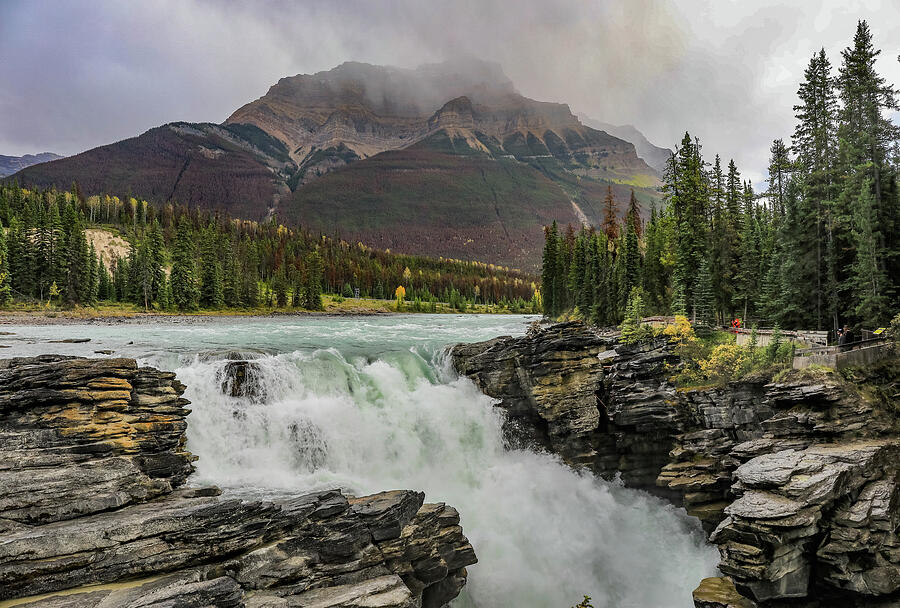
A medical waiting room is not just a place where people sit. It is the first room patients experience before a visit, consultation, treatment, or appointment. That makes the artwork more important than decoration. The imagery should help the room feel organized, warm, and visually calm without overwhelming the space.
The best waiting room artwork usually has one thing in common: it gives the eye somewhere easy to rest. For my own healthcare and wellness artwork pages, I usually start with water, fog, forests, open fields, soft coastlines, quiet mountains, and low-distraction landscapes rather than dramatic or visually busy scenes.
For waiting rooms, one confident calming image is often more effective than several small pieces competing for attention.
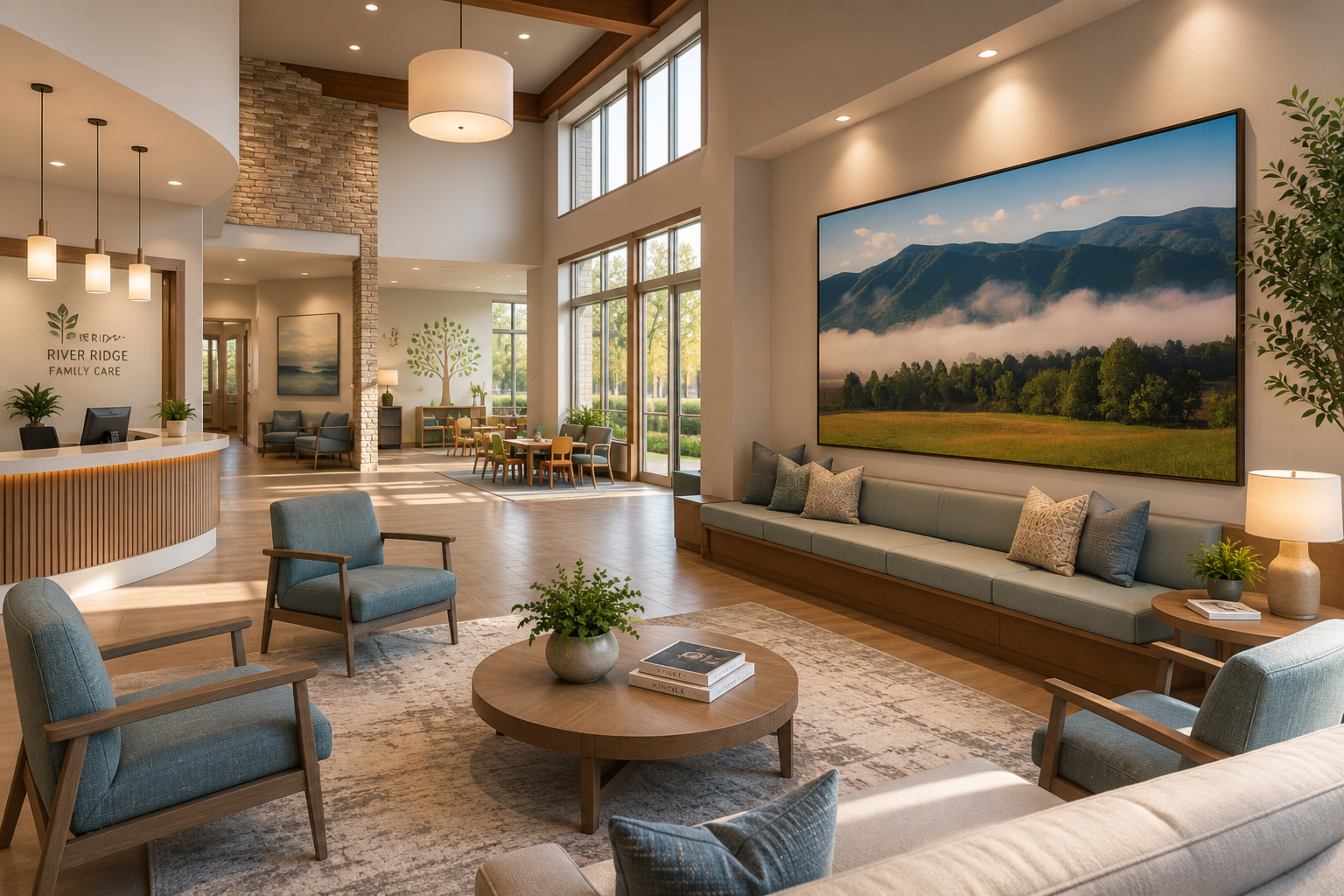
Start with the feeling patients should have when they enter.
Before choosing a subject, decide what the waiting room should communicate. A family practice may need warmth and reassurance. A dermatology or dental office may need clean, bright, polished imagery. A therapy office may need privacy and decompression. A wellness clinic may need a softer, spa-like atmosphere.
That is why nature imagery is useful in healthcare spaces. It can be calm without being bland, professional without feeling corporate, and familiar without feeling overly decorative.
Choose nature imagery that is calm, not overly dramatic.
Not every beautiful landscape belongs in a waiting room. Strong storms, intense orange sunsets, high-contrast wildlife, or crowded forest scenes may be impressive, but they can also feel too active for a patient-facing space. Waiting room artwork should usually support the room rather than dominate it.
Good directions include soft water movement, quiet lakes, gentle coastlines, foggy fields, forest paths, waterfalls with controlled contrast, and open horizons. These subjects give the room a restorative tone while still feeling mature and professional.
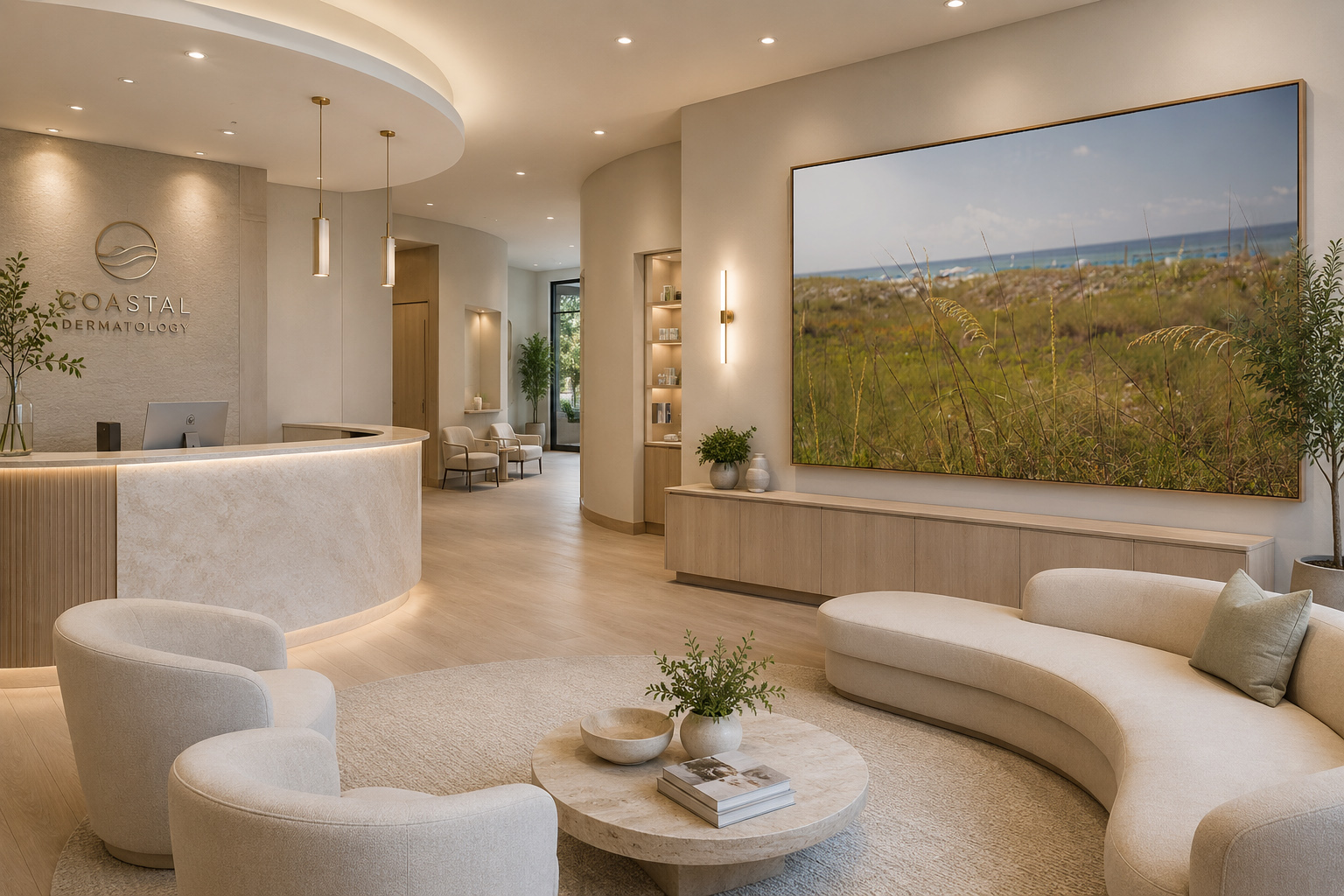
Clean Coastal Calm
Coastal grasses and soft water tones work well in bright, polished practices that need a calm but refined patient experience.
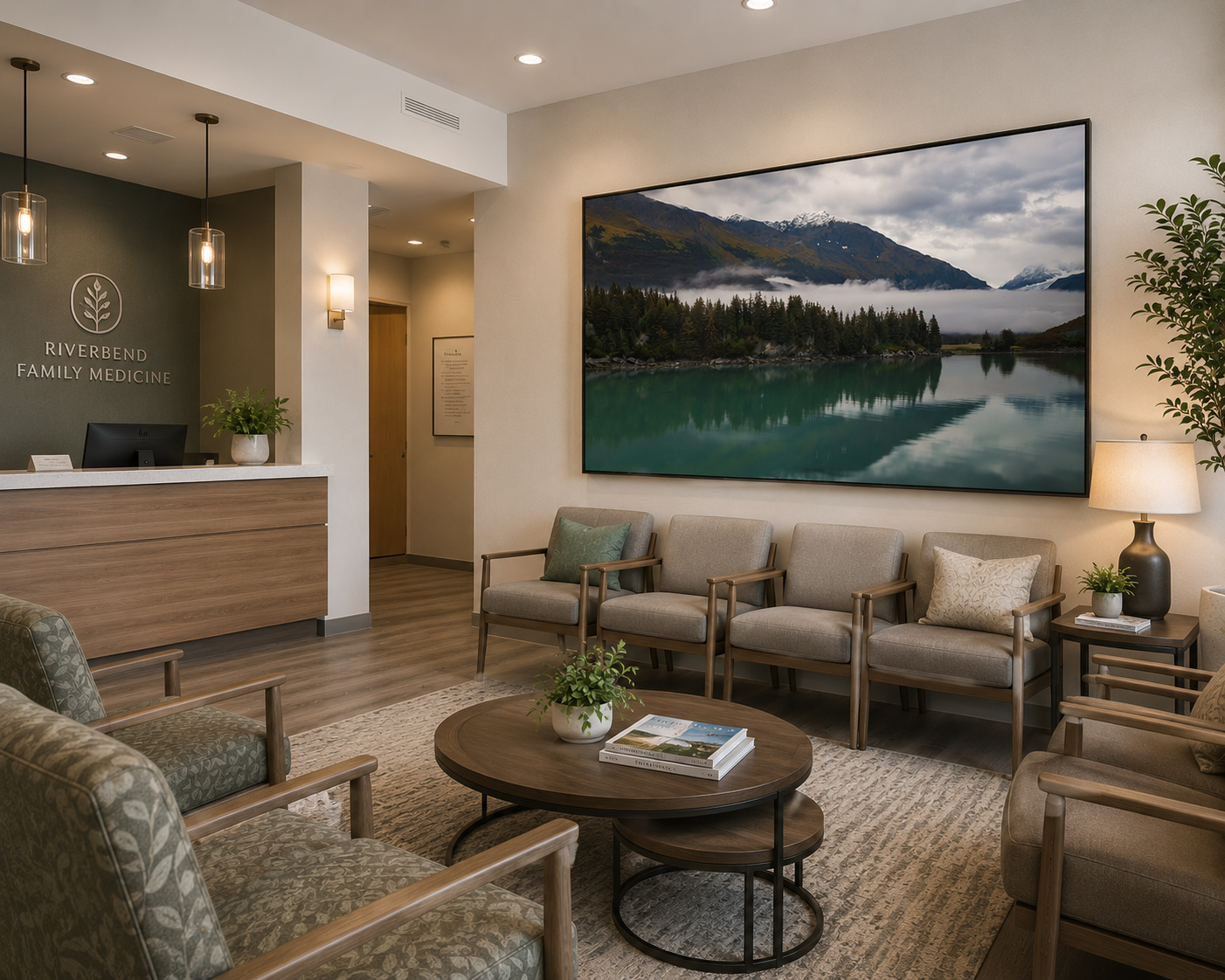
Quiet Lake Reflection
Lake and mountain imagery adds depth, stability, and a sense of visual breathing room to a waiting area.
Match the artwork to the type of practice.
A dermatology office, therapy practice, dental office, chiropractic clinic, and family medicine waiting room may all need calming artwork, but they do not need the exact same mood. The most effective artwork feels aligned with the kind of care being offered.
Think about scale before subject.
Many waiting rooms make the mistake of using artwork that is too small. A single larger piece above a row of chairs, reception seating, or a built-in bench can feel more intentional than a scattered set of small frames. Large horizontal landscapes are especially helpful because they visually widen the room and create a calm focal point.
A good starting point for many waiting rooms is 30x40, 36x48, 40x60, or larger, depending on the width of the wall and how far visitors sit from the artwork. In larger lobbies or wellness centers, oversized artwork can make the room feel finished and professional.
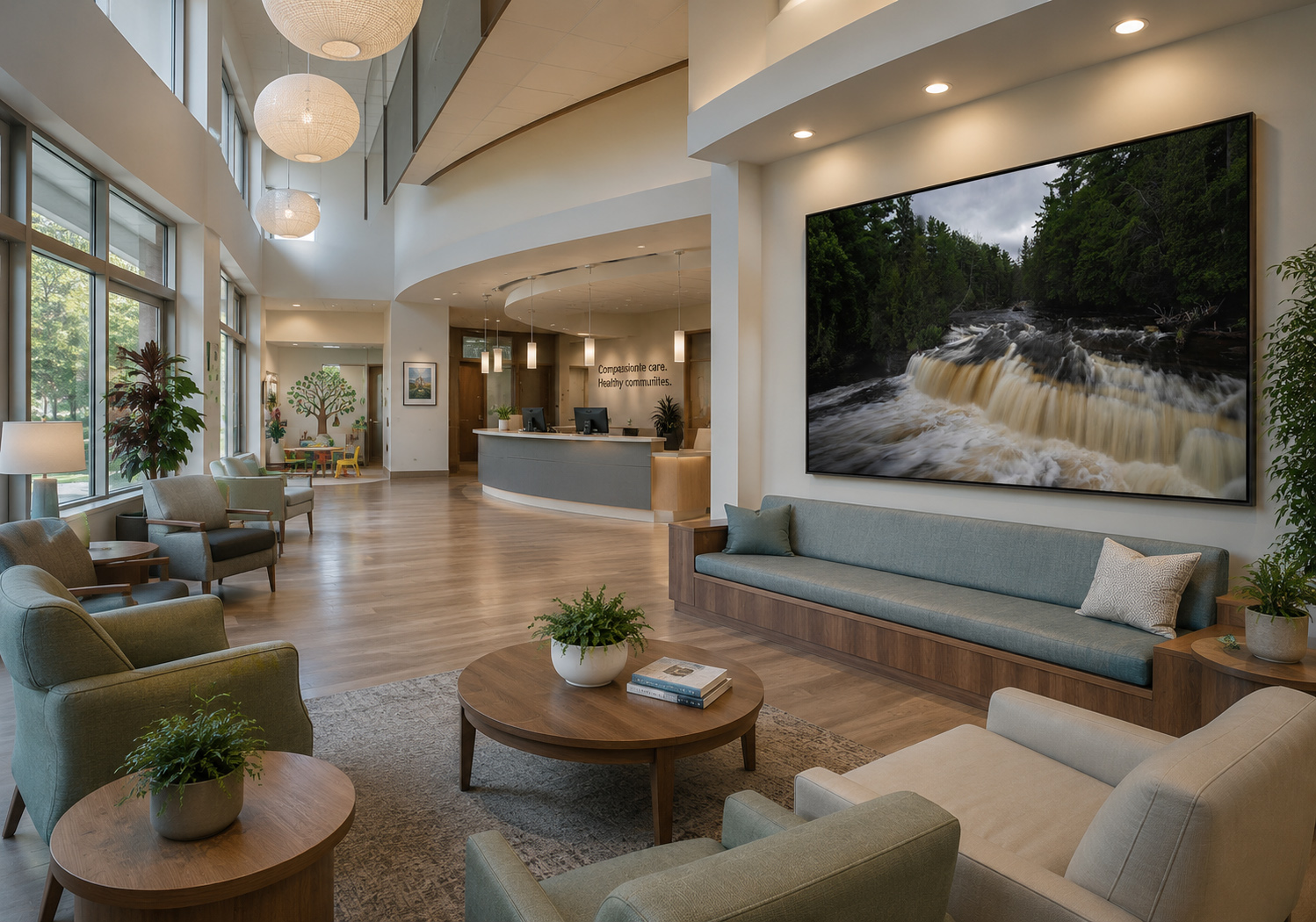
Use local nature when it strengthens connection.
Regional artwork can help a waiting room feel less generic. For Ohio medical offices, a Hocking Hills waterfall, Ohio forest, Lake Erie shoreline, or quiet Midwest landscape can add a subtle sense of place without becoming distracting. Local nature works especially well for independent practices that want the space to feel community-rooted.
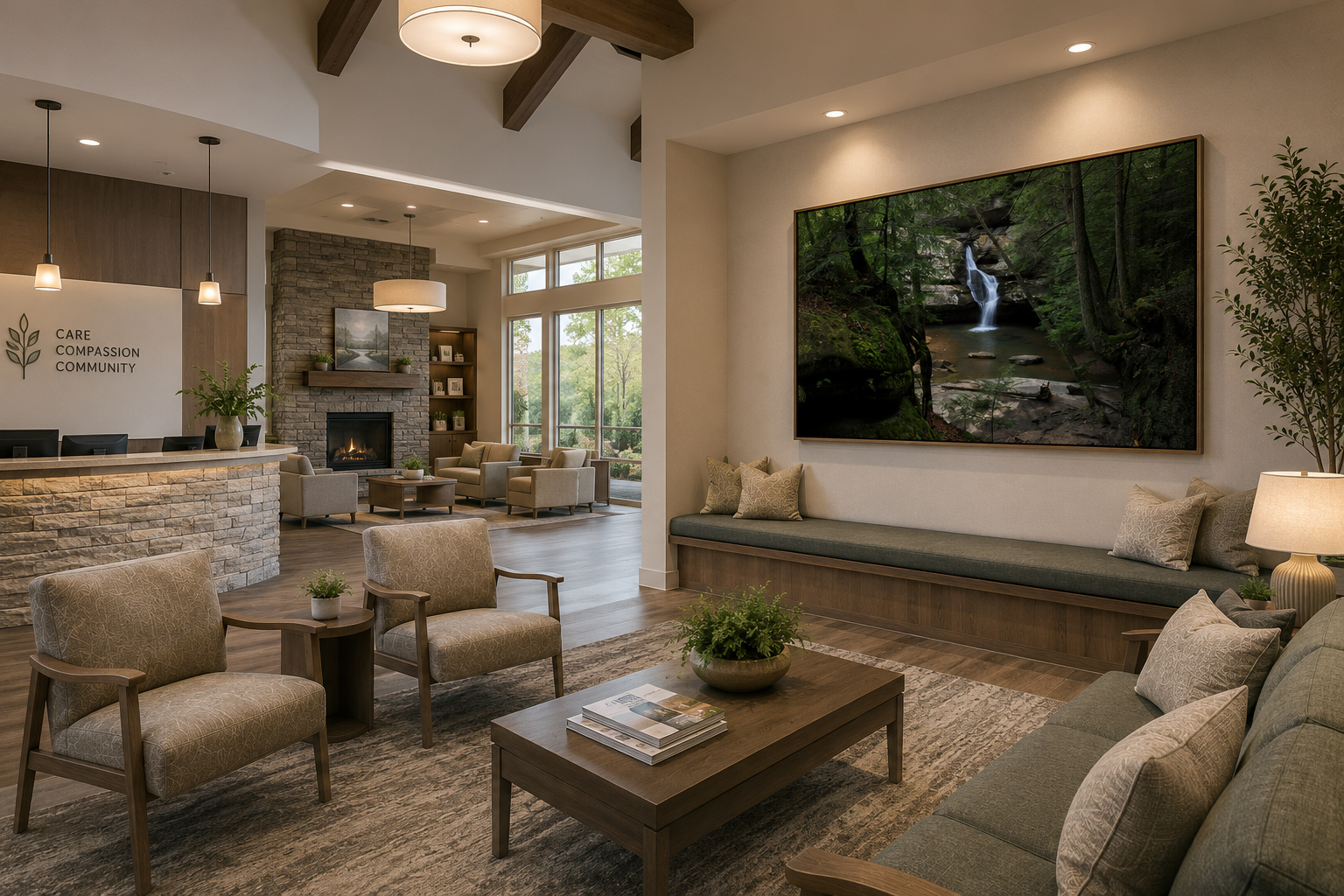
Regional Calm
A local waterfall scene can make a healthcare space feel more connected to place, especially for Ohio practices.
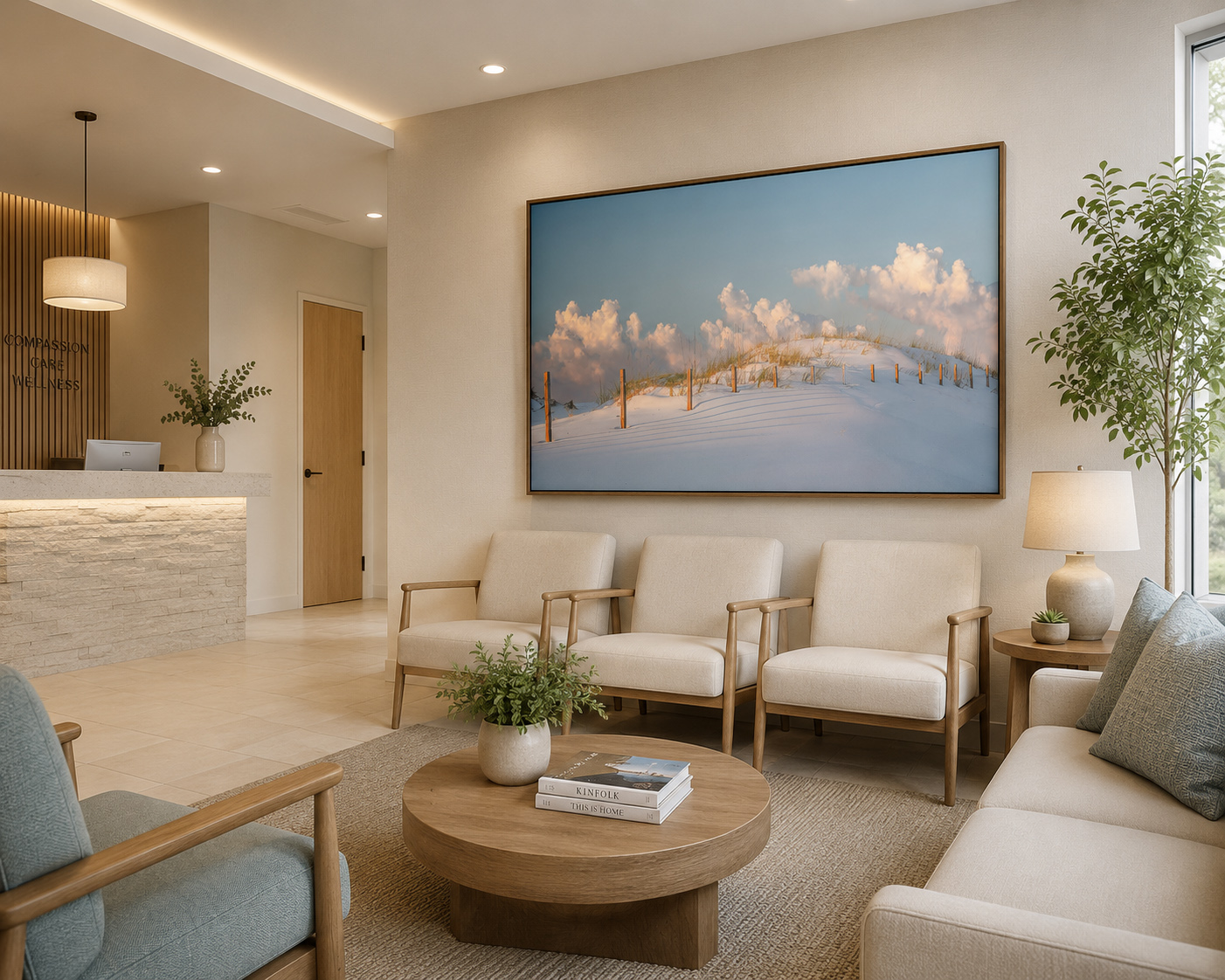
Soft Coastal Light
Quiet dune and sky imagery is useful when a waiting area needs brightness, softness, and a lighter emotional tone.
Request a room mockup before ordering.
The easiest way to avoid guessing is to test the artwork in the room before purchasing. A simple mockup can help compare size, format, framing, color temperature, and whether a piece feels too busy or too quiet for the wall.
For medical offices, therapy practices, dental offices, wellness clinics, and other patient-facing spaces, I recommend choosing the artwork only after considering the room’s seating, wall width, lighting, flooring, and overall mood. A print that looks beautiful on its own should also feel right inside the environment.
For examples of room-specific placement, visit the dedicated Waiting Room Artwork page, or explore the broader Healthcare Artwork resource for patient rooms, corridors, therapy offices, oncology spaces, and wellness interiors.