Why It Matters
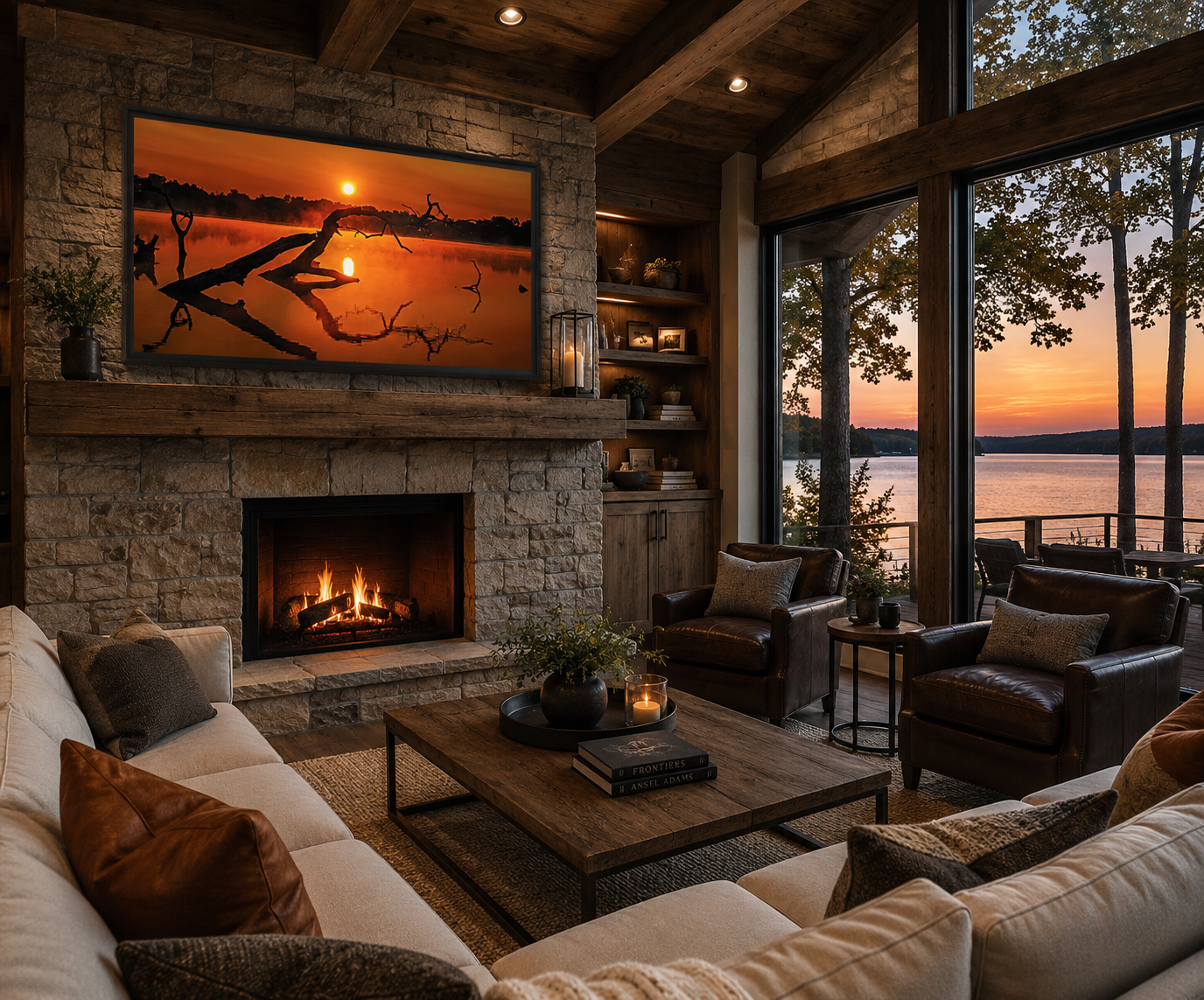
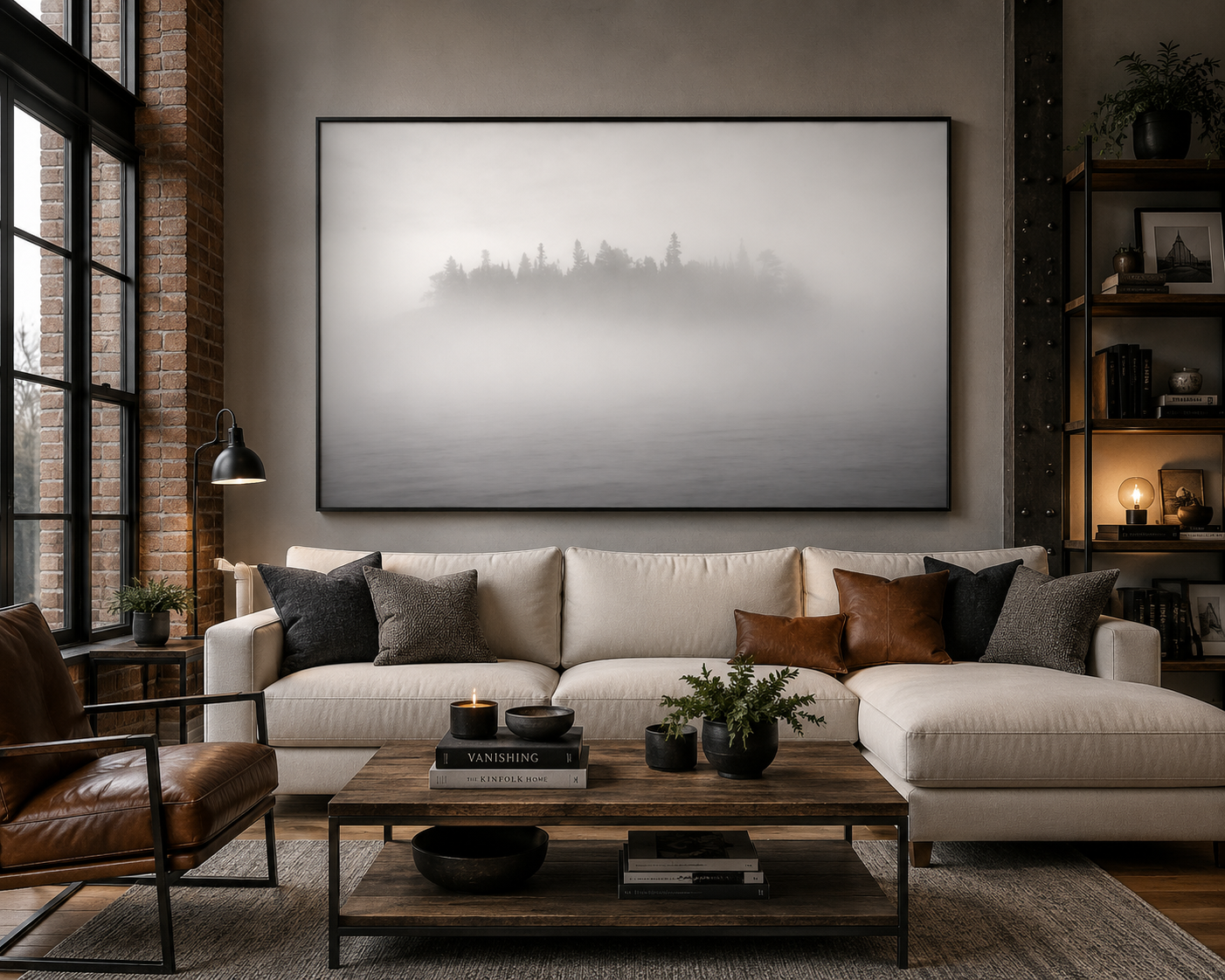
Large artwork gives the room a visual center.
Living rooms usually carry several competing elements: seating, tables, windows, fireplace walls, rugs, shelving, and lighting. Large wall art helps organize those elements by giving the eye one clear place to land.
Smaller artwork can work beautifully in hallways, bedrooms, and grouped vignettes, but it often feels underpowered above a sofa or fireplace. When the wall is wide, the artwork needs enough presence to feel intentional from across the room.
Scale & Proportion
Start with the furniture below it.
The easiest way to choose the right size is to measure the sofa, console, mantel, or wall area below the artwork. As a general rule, the framed piece should be about two-thirds to three-quarters the width of the furniture below it.
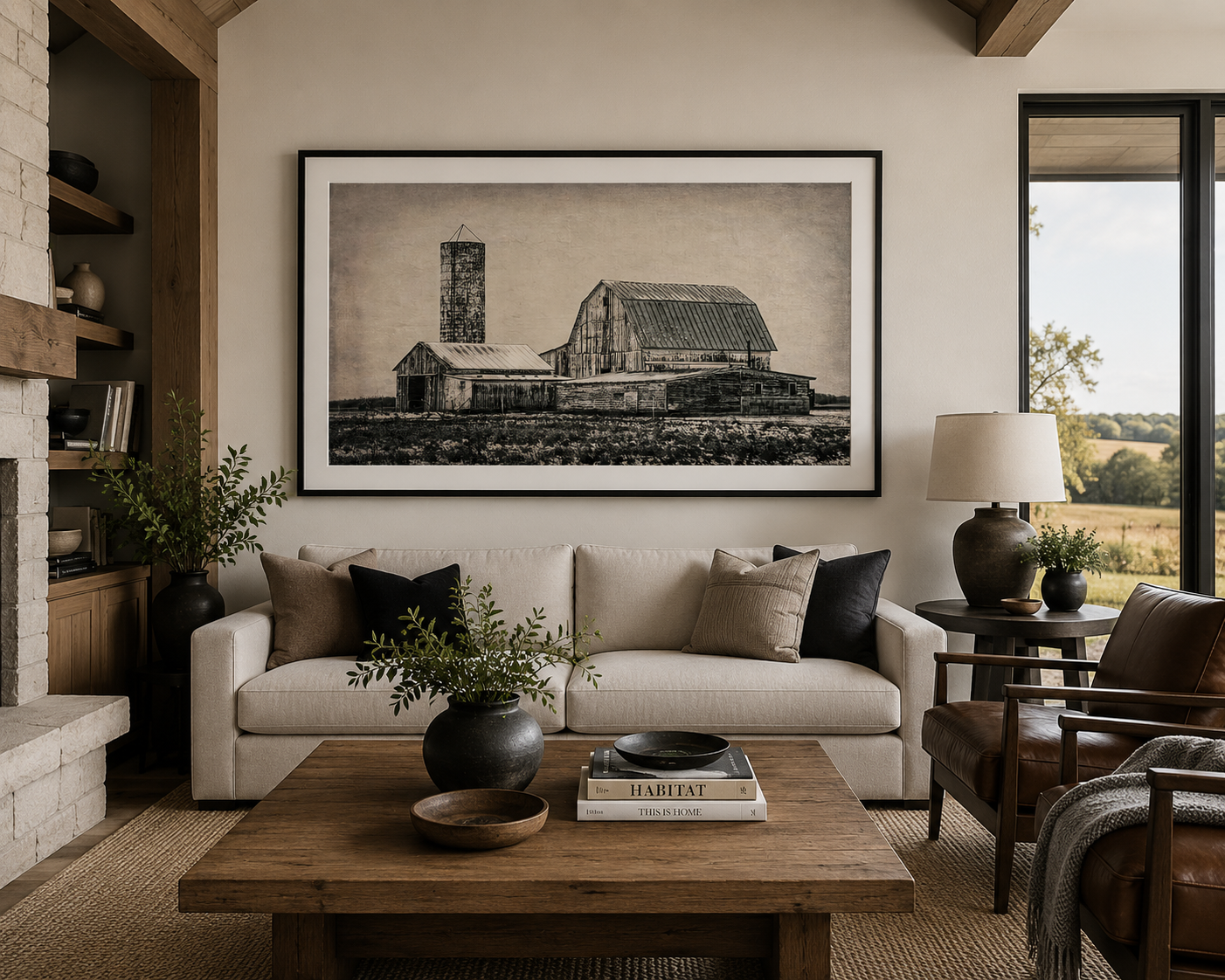
If the piece looks like it is floating by itself, it is probably too small. If it crowds the furniture, windows, or ceiling line, it is probably too large.
Mood
Choose the feeling before choosing the subject.
Before choosing a print, decide how the living room should feel. A quiet foggy landscape can soften an urban or modern room. A waterfall scene can bring a fresher, restorative feeling. A warm sunset can add depth and glow to a lodge, lake house, or rustic interior.
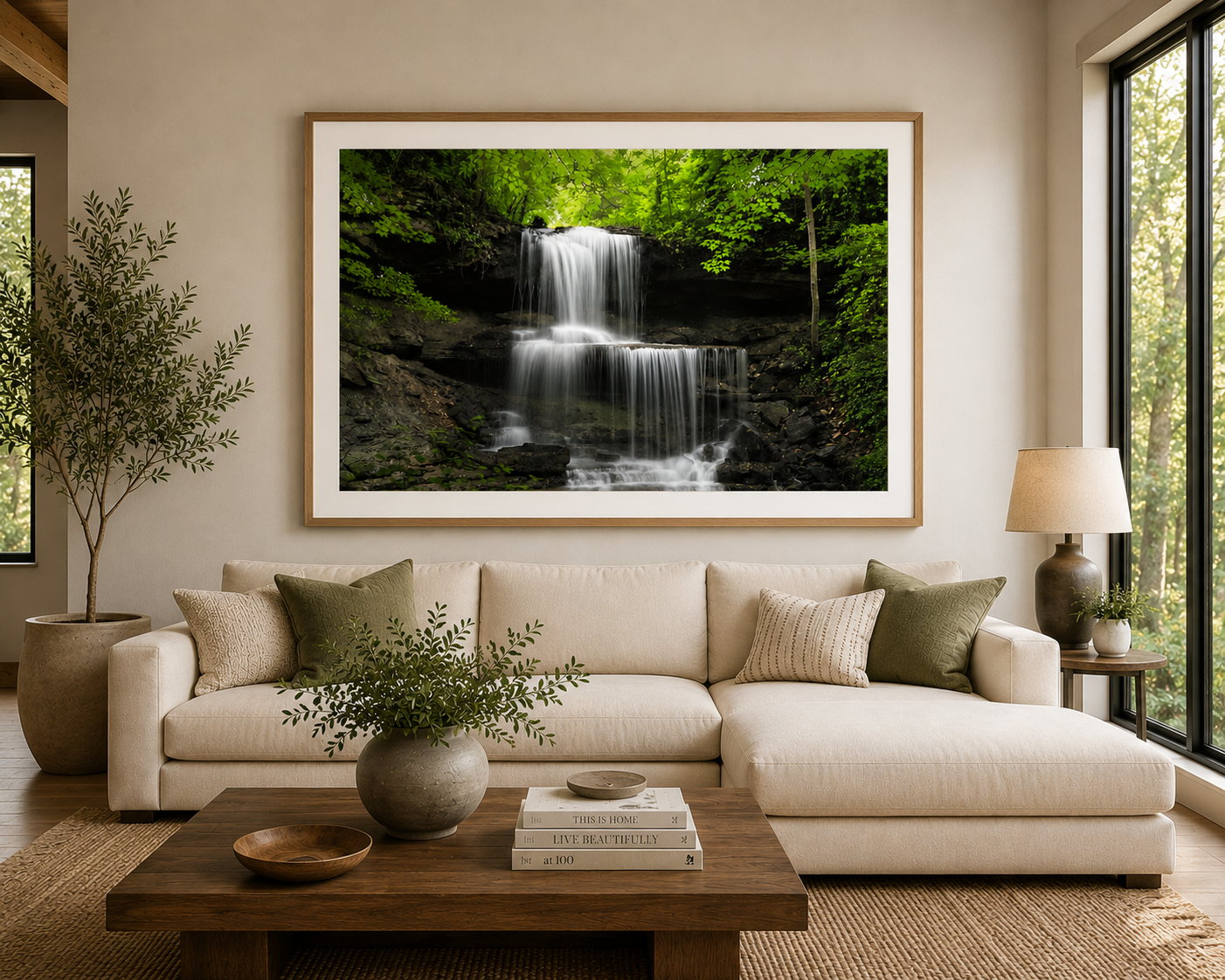
For softer rooms, start with Quiet Earth or Wellness Waters. For a stronger focal point, mountain, lake, black-and-white, or mixed media pieces can give the wall more structure.
Placement
Hang it low enough to belong to the seating area.
A common mistake is hanging large artwork too high. When art sits above a sofa, it should feel connected to the furniture, not stranded near the ceiling. Leave roughly 6 to 10 inches between the top of the sofa and the bottom of the frame.
On a blank wall without furniture below it, center the artwork around eye level, usually about 57 to 60 inches from the floor to the center of the piece. In rooms with tall ceilings, resist the urge to keep moving the art upward. The artwork should relate to people in the room, not only to the wall height.
Framing & Finish
The frame changes how the artwork reads.
Natural wood frames tend to feel warmer and more residential. Black or dark frames create a cleaner edge and work well in modern, industrial, or high-contrast rooms. A wide mat can make a photograph feel quieter and more gallery-like, while a full-bleed presentation feels more direct and contemporary.
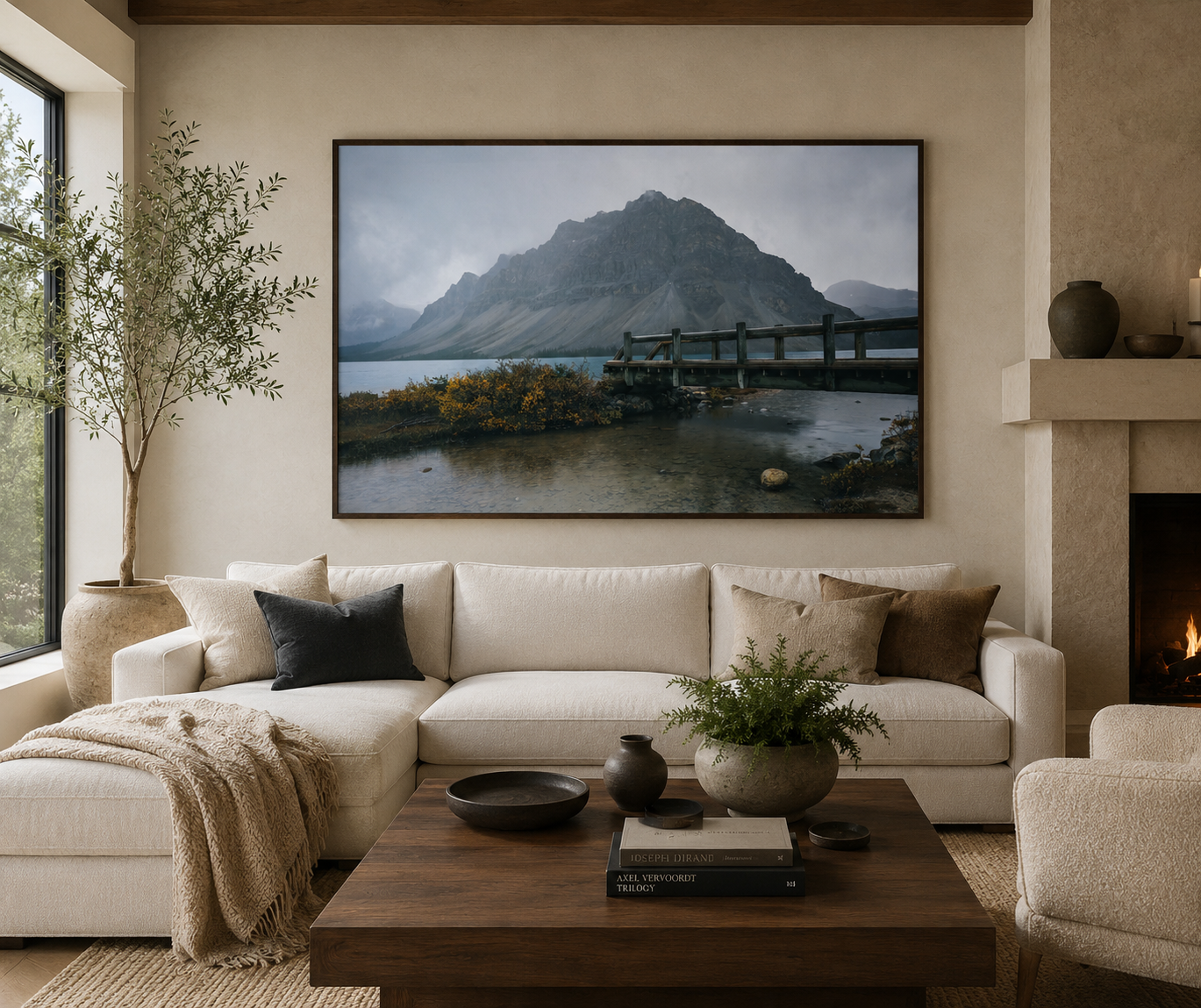
If you are choosing between canvas, framed paper, metal, acrylic, or another print format, the best option depends on the room, lighting, size, and how formal you want the piece to feel. For more help, see the Artwork Guides.
Final Checklist
Before ordering, check these five things.
- Measure the furniture or wall area below the artwork.
- Confirm the artwork is roughly two-thirds to three-quarters of that width.
- Choose a mood that supports the room: calm, dramatic, warm, minimal, rustic, or refined.
- Pick a frame or print finish that matches the interior style.
- Preview the piece in the room when possible before choosing the final size.