Oregon Road Trip · Field Notes

Oregon Coast road trip itinerary and photography guide—from sea stacks to mountain lakes.

Last autumn we started in Seattle, followed Highway 101 from Astoria to Bandon, then turned inland toward Bend, Sisters, Mount Hood, and the Columbia River Gorge. This guide combines the route we followed, a practical eight-day itinerary, favorite photography stops, wildlife encounters, planning notes, and the images that stayed with me.

The journey south

A road trip built around stopping often.

We flew into Seattle and drove toward Astoria before beginning the long trip down Highway 101. The plan was loose enough to leave room for weather, wildlife, and any stretch of coastline that made us pull over. That flexibility became important. Oregon is not a place I wanted to experience only through a windshield.

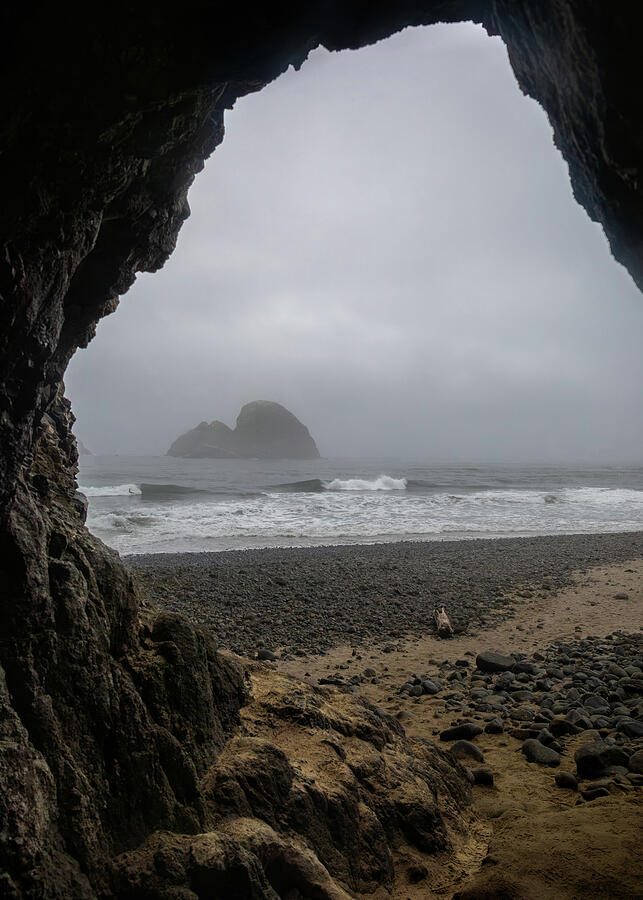
Some stops were familiar names—Cannon Beach, Tillamook, Lincoln City, Newport, Yachats, and Bandon—but the moments I remember best were often smaller: a seal surfacing near the rocks, a whale disappearing beneath gray water, sea lions piled together at the docks, or the sound of surf echoing through a dark coastal cave.

8 daysA fast but workable loop when you are comfortable moving most days.
Highway 101The coastal spine from Astoria south toward Bandon.
Coast + CascadesSea stacks, lighthouses, wildlife, high lakes, mountains, and waterfalls.
AutumnCooler weather, shifting light, and fewer midsummer expectations.
A note about pace

This route covers a lot of ground. It worked for us because photography trips naturally begin early and often end after sunset. Travelers who prefer slower mornings should add two or three days, especially around Newport, Yachats, Bandon, Bend, or the Columbia River Gorge.

Suggested itinerary

How I would structure eight days.

Day 1

Seattle to Astoria and Cannon Beach

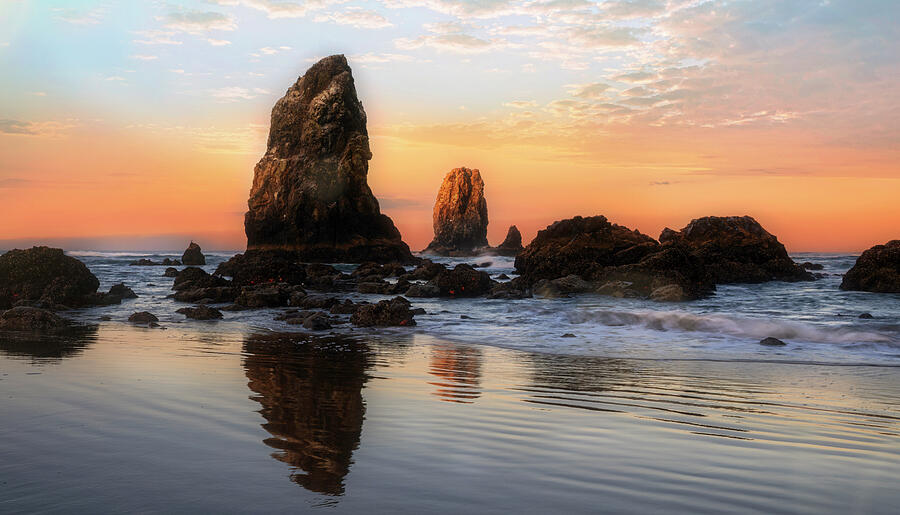
Leave the Seattle area early, cross into Oregon, spend time around Astoria, and continue to Cannon Beach for the evening. Haystack Rock is worth seeing in more than one kind of light, so I would protect sunset rather than overfill the afternoon.

Best light: sunset · Primary photograph: Haystack Rock
Day 2

Tillamook, Neskowin, Lincoln City, and Depoe Bay

This is a day for short stops rather than one major destination. Tillamook breaks up the drive, Neskowin and Lincoln City bring quieter coastal scenes, and Depoe Bay deserves enough time to watch the water. We saw both harbor seals and gray whales here.

Wildlife priority: Depoe Bay · Keep binoculars and a telephoto lens ready
Day 3

Newport and Yaquina Head

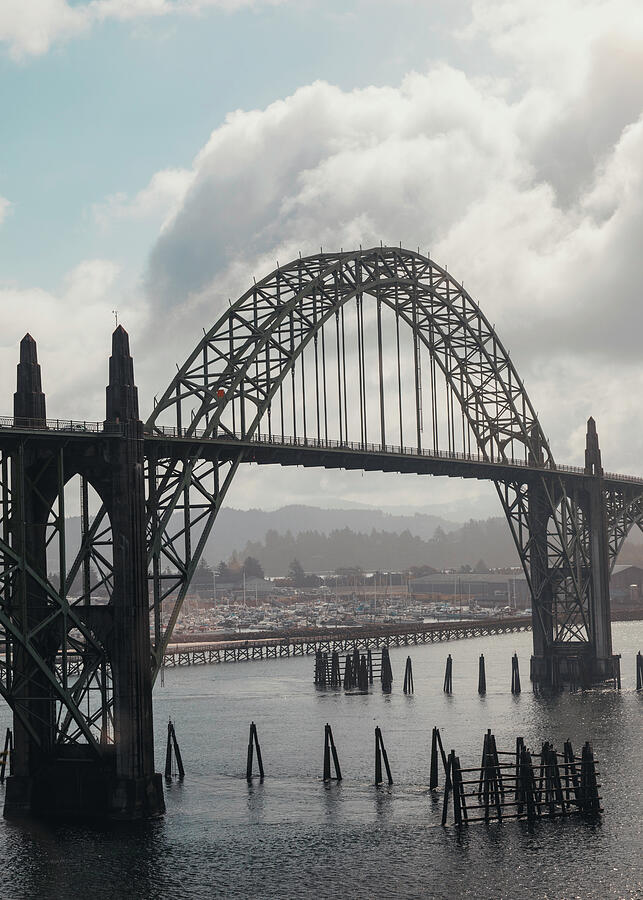
Newport can easily fill a day. The working harbor, Yaquina Bay Bridge, sea lions, Yaquina Head Lighthouse, and the beach below the headland all feel different. I would plan one harbor session and one late-day session around Yaquina Head.

Favorite combination: lighthouse, beach, bridge, and wildlife
Day 4

Yachats, Cape Perpetua, Thor’s Well, and Heceta Head

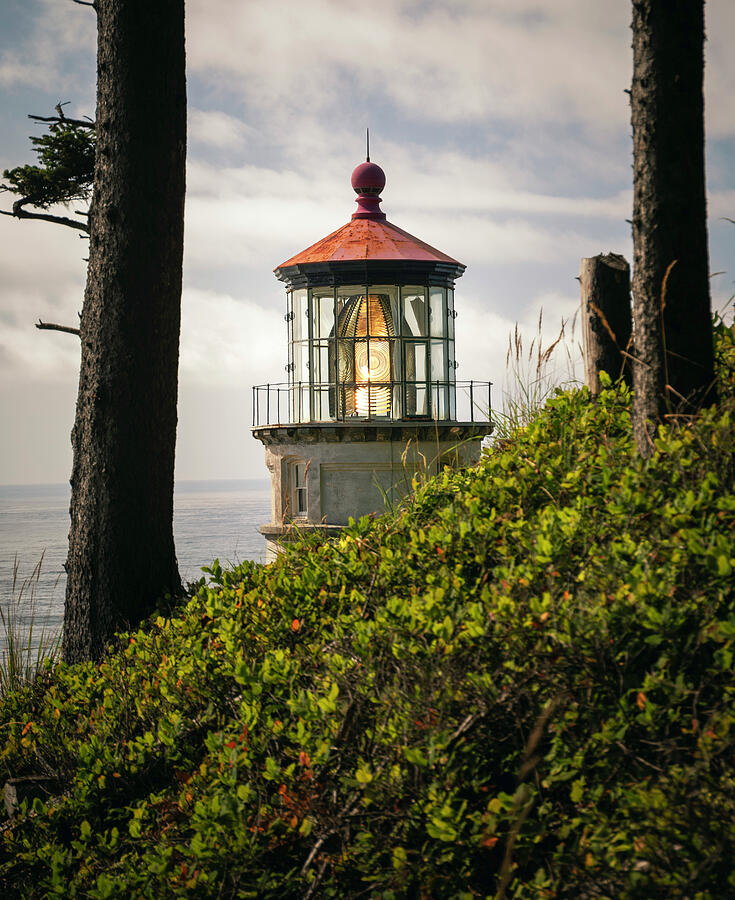
The coast becomes rougher and more dramatic. Check tides before approaching any rocky shoreline and give Thor’s Well more distance than your camera seems to want. Heceta Head offers several compositions, including views through trees that make the lighthouse feel discovered rather than simply documented.

Safety priority: tides, waves, and slippery rock
Day 5

Bandon and the southern sea stacks

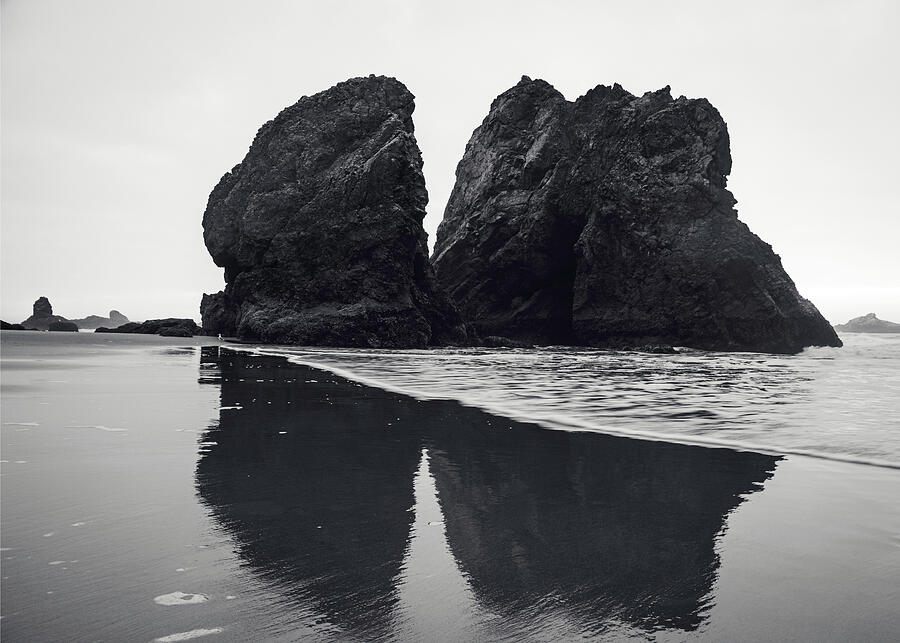
Bandon was a natural place to slow down. Face Rock and the surrounding formations work in changing weather, but sunset gave us the strongest emotional finish. Arrive early enough to look for foregrounds, reflections, tide pools, and safe routes back from the water.

Best experience: remain through the last color after sunset
Day 6

Turn inland toward Bend, Sisters, and Sparks Lake

The drive inland changes the trip completely. The Pacific disappears, the air dries out, and volcanic mountains begin to define the horizon. Sparks Lake was our evening target, where warm light and calm water simplified the landscape.

Best light: late afternoon through sunset · Bring layers
Day 7

Mount Hood and Trillium Lake

Allow time for mountain weather to change. We ended the day around Trillium Lake, where reflections and evening color created a much quieter mood than the coast. This is a good day to avoid an overly rigid schedule.

Photography priority: reflection, mountain silhouette, and changing clouds
Day 8

Wahkeena Falls, Multnomah Falls, and the Columbia River Gorge

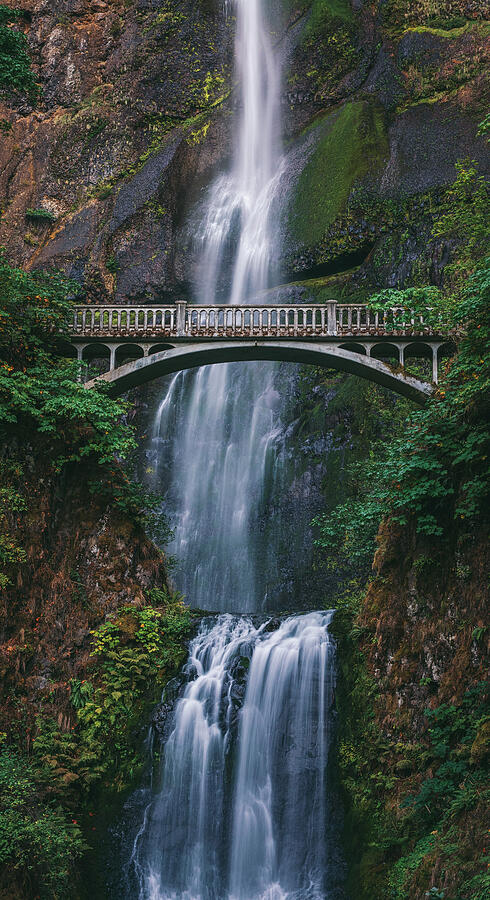
Finish among waterfalls and Gorge viewpoints before returning toward SeaTac. Multnomah Falls is famous and busy, but patience matters more than pretending the crowds are not there. I waited for a brief opening to make the long exposure without people dominating the scene.

Check current access, parking, and permit information before leaving
Haystack Rock on Cannon Beach beneath a clear autumn sky
Haystack Rock was one of the first scenes that made the trip feel unmistakably Oregon.View this print

Cannon Beach to Depoe Bay

The coast rewarded patience more than speed.

Cannon Beach is famous for good reason, but the place changed as the light changed. At low tide the sand created long leading lines toward Haystack Rock. By sunset, the same beach became a study in reflections and warm light.

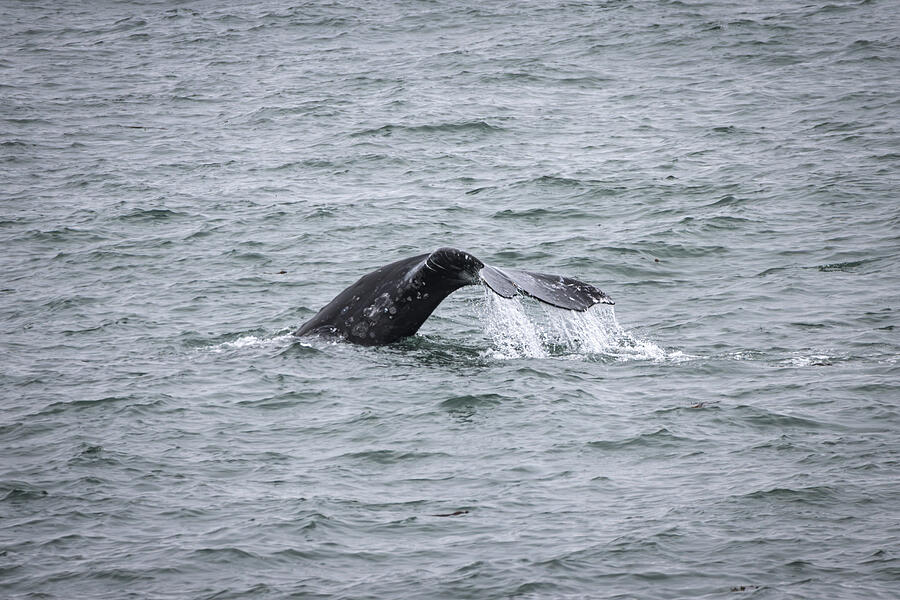
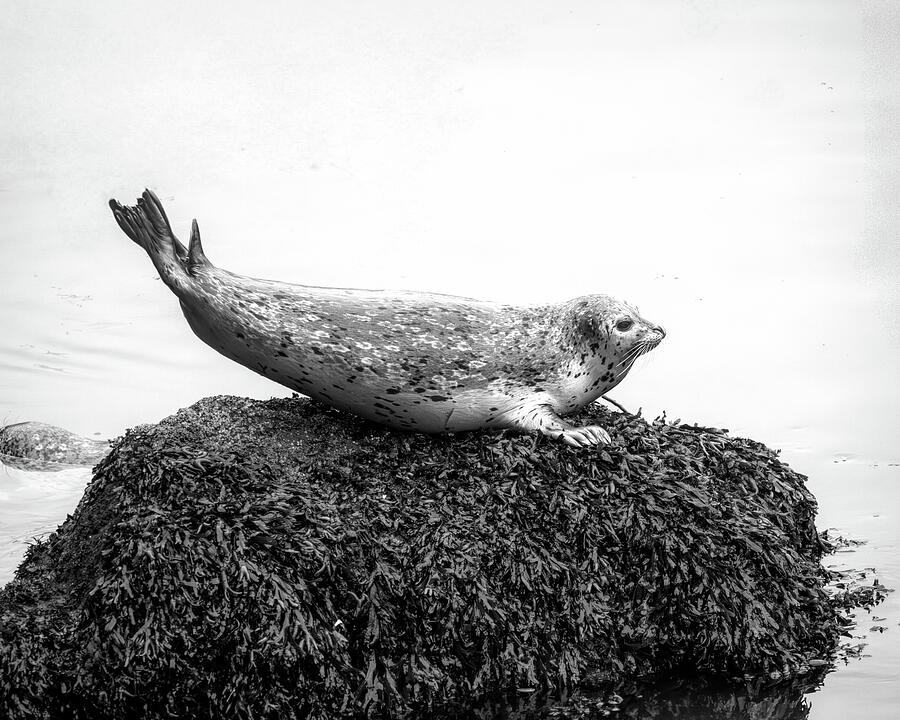
Farther south, Lincoln City and Neskowin felt moodier. Depoe Bay became one of our favorite stops. We watched for whales from the bridge and nearby overlooks, and seeing the lift of a gray whale’s fluke made the waiting worthwhile. Harbor seals appeared closer to shore, turning a roadside stop into one of the most memorable wildlife moments of the trip.

Gray whale fluke rising from the water near Depoe Bay Oregon

Newport and Yaquina Head

A lighthouse, a beach, and a working harbor.

Newport offered several sides of the coast in one place. The Yaquina Bay Bridge rose above the harbor, sea lions crowded the docks below, and Yaquina Head gave us one of our favorite combinations of lighthouse, exposed rock, and open ocean.

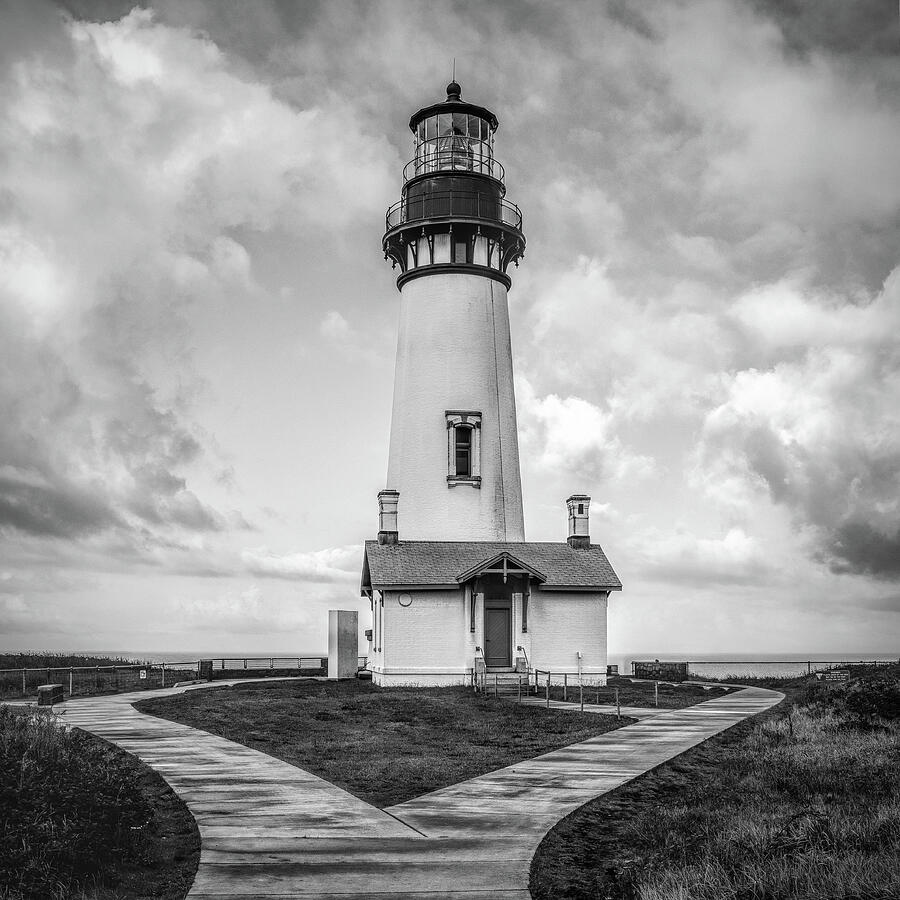
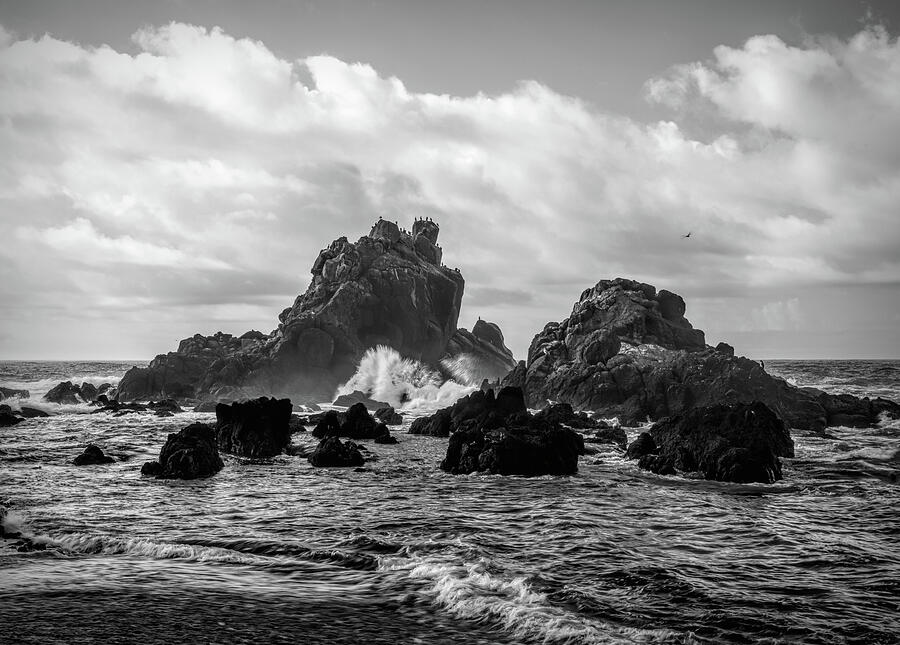
I kept returning to black and white along this part of the trip. The simple shapes of the lighthouse, offshore rocks, foam, and low clouds felt stronger without color. The beach below Yaquina Head was every bit as memorable as the lighthouse itself.

Yaquina Head Lighthouse in dramatic black and white

Yachats to Bandon

The coast became wilder and more unusual.

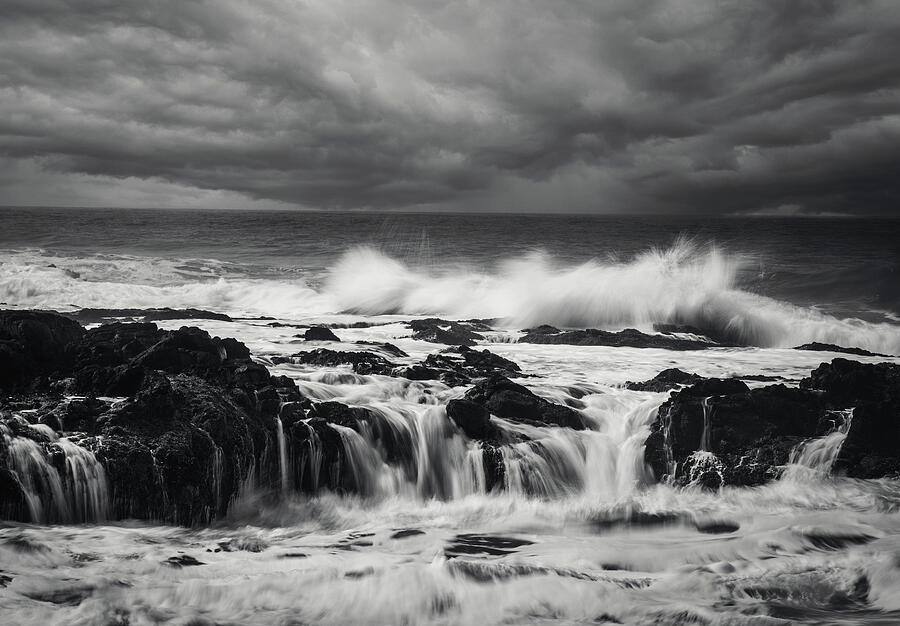
Yachats felt different from the broad beaches farther north. The shoreline was darker, rougher, and louder. Thor’s Well and the surrounding Cape Perpetua coast made it easy to understand why people stay well back from the edge. Even from a careful distance, the force of the water was obvious.

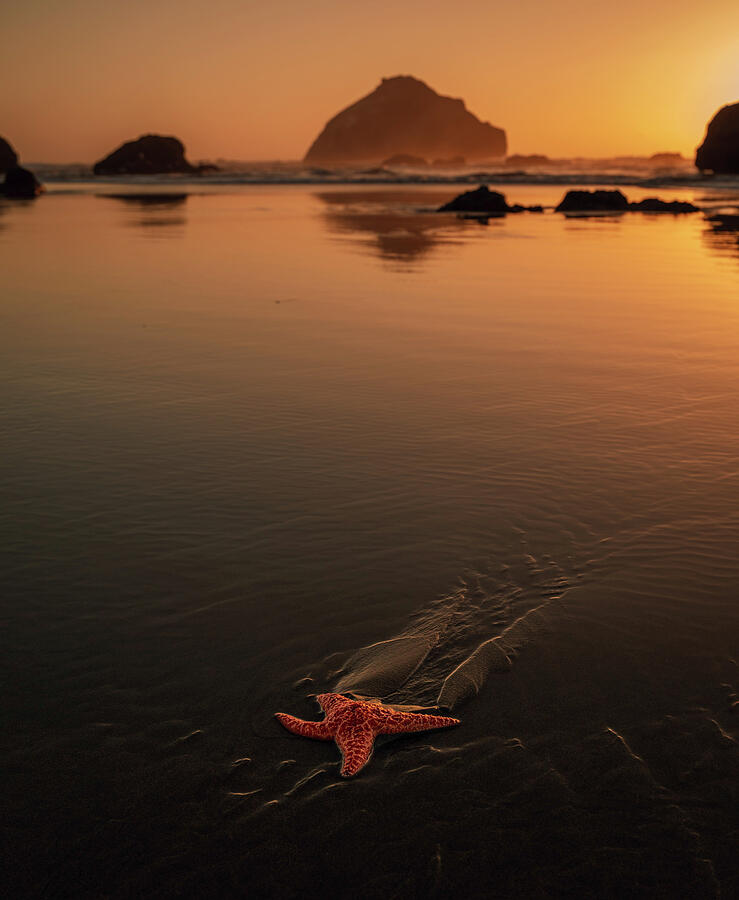
Heceta Head was another favorite, partly because the lighthouse reveals itself through trees and changing viewpoints. By the time we reached Bandon, the sea stacks seemed larger and more sculptural. A starfish resting in the sand at sunset became a quiet foreground to Face Rock and the warm evening light.

Starfish on the beach at sunset near Face Rock in Bandon Oregon

Turning inland

From ocean weather to mountain light.

After Bandon we worked inland toward Bend and Sisters. The transition was one of my favorite parts of the trip. Salt air and sea stacks gave way to open country, volcanic peaks, forests, and high lakes.

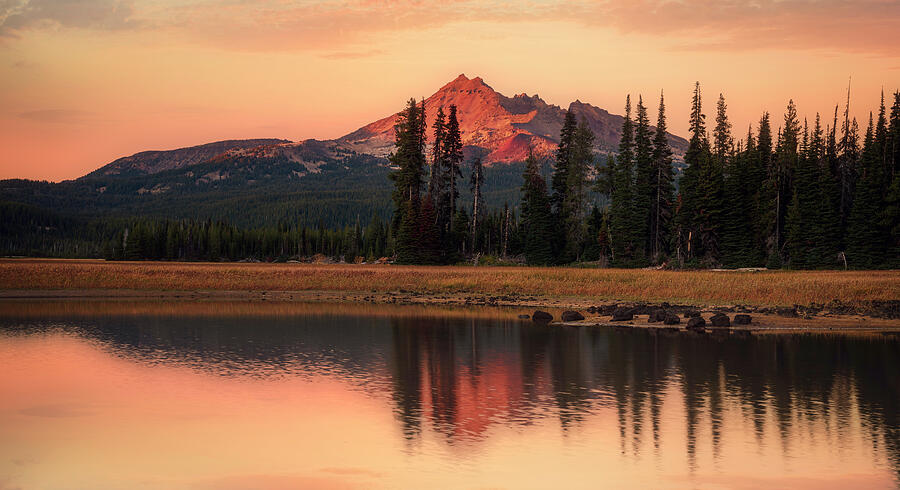
Sparks Lake gave us a quiet sunset beneath the Sisters. Later, Mount Hood and Trillium Lake brought the trip into another familiar Oregon landscape—calm water, mountain silhouettes, and the kind of evening light that asks you to stay until the color is completely gone.

Sparks Lake reflecting the Sisters at sunset in Central Oregon

Columbia River Gorge

Ending among waterfalls.

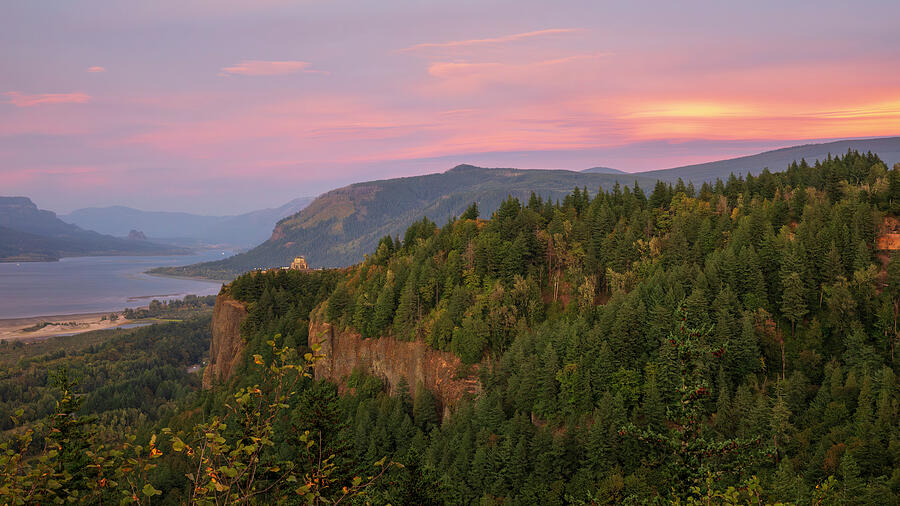
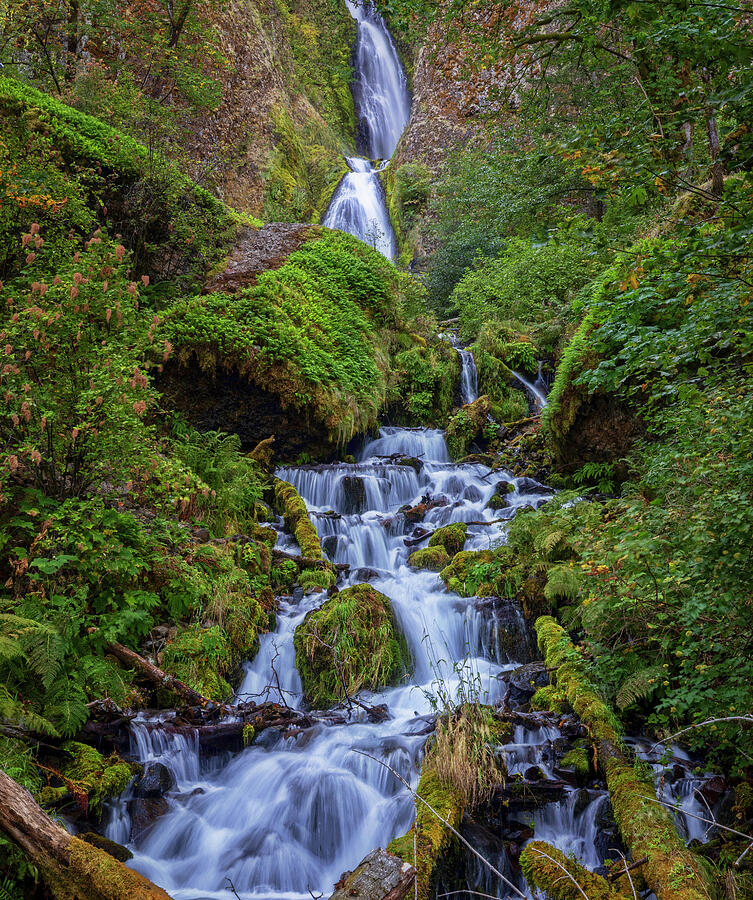
We spent the final part of the trip in the Columbia River Gorge. Wahkeena Falls felt enclosed and green, while Multnomah Falls had the scale and symmetry that make it instantly recognizable.

Photographing Multnomah Falls without people required patience. I waited for brief openings on the bridge and around the viewing areas, then used a long exposure to soften the water while keeping the structure of the falls intact. It was less about finding an empty place than being ready for the few seconds when the scene finally cleared.

Multnomah Falls and Benson Bridge photographed with a long exposure

Leave space in the schedule

Wildlife, fog, surf, and changing light rarely appear on demand.

Check tides first

Many beaches, caves, and tide-pool scenes depend on safe timing.

Carry rain protection

Ocean spray and waterfall mist can arrive even when the forecast looks manageable.

Be patient at landmarks

A few quiet seconds can make a familiar place feel personal.

Favorite photography locations

The places I would make time for again.

01 · Cannon Beach

Best first impression

Haystack Rock is familiar, but low tide, reflected light, shifting clouds, and the scale of the beach create more possibilities than one iconic composition.

02 · Depoe Bay

Favorite wildlife stop

Watching the water from the bridge and nearby overlooks was one of the most engaging parts of the trip. The uncertainty made each whale or seal sighting feel earned.

03 · Yaquina Head

Favorite lighthouse area

The lighthouse, cobble beach, offshore rocks, birds, surf, and open sky offered a full afternoon of compositions. Black and white suited the weather especially well.

04 · Bandon

Favorite sunset

The sea stacks are sculptural in almost any weather, while the beach offers foregrounds that change with every tide. The starfish image became one of the most personal photographs from the trip.

05 · Sparks Lake

Favorite mountain evening

After days of moving water and loud surf, the quiet reflection beneath the Sisters felt almost like a reset. The transition inland made the scene even more memorable.

06 · Columbia River Gorge

Best final chapter

Wahkeena Falls, Multnomah Falls, and the Gorge overlooks gave the trip a fitting finish: water again, but in an entirely different landscape.

Wildlife along the coast

Whales, harbor seals, and a noisy Newport dock.

Gray whales at Depoe Bay

We watched from shore rather than building the day around a tour. That meant waiting and scanning broad areas of water, but it also made the moment a fluke appeared feel spontaneous. A telephoto lens helped, though binoculars were useful when the whales surfaced farther out.

Harbor seals near the rocks

The seals were easier to miss because they blended into the water and shoreline. I tried to keep distance, avoid blocking their path, and let the animal’s behavior determine whether I stayed or moved on.

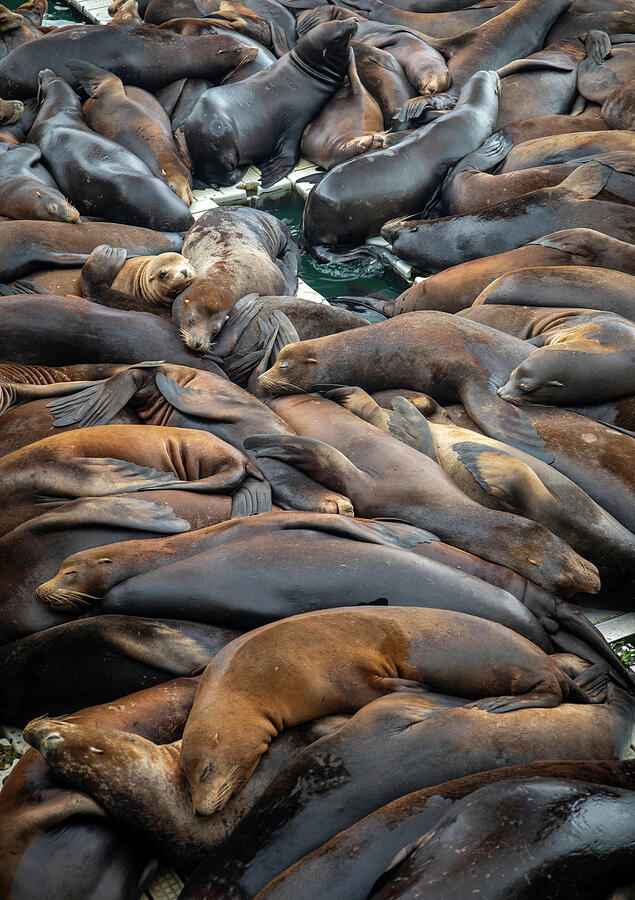
Sea lions in Newport

The Newport docks were the opposite of quiet. The sea lions were crowded together, constantly shifting, barking, and sleeping across one another. It was one of the most animated scenes of the trip and a useful reminder that wildlife photography does not always require wilderness.

Wildlife photography note

Carry the telephoto lens even when the day is mostly about landscapes. Keep enough distance that the animal continues behaving naturally, and never move closer simply because the first frame feels too small.

Lighthouses and shoreline

Two lighthouse stops that felt completely different.

Yaquina Head

Yaquina Head felt exposed and graphic. The lighthouse rises above open ground, while the beach below adds foam, dark rock, and offshore formations. The overcast conditions pushed me toward black and white, where the architecture and coastline could carry the image without depending on color.

I would allow more time than a quick lighthouse stop suggests. The strongest photographs may be below the tower, along the beach, or looking back toward the headland rather than standing directly in front of the building.

Yaquina Head Lighthouse in black and white

Heceta Head

Heceta Head felt more concealed. Trees, vegetation, changing elevation, and distant viewpoints made the lighthouse reveal itself gradually. I preferred the compositions that framed the light through the landscape instead of isolating it against the sky.

The difference between the two lighthouse areas is part of what made the drive rewarding: one open and austere, the other layered and almost secretive.

Heceta Head Lighthouse framed by coastal trees

Photography notes

What helped when the weather, water, and schedule kept changing.

Wide-angle lens

Useful for sea stacks, beaches, caves, waterfalls, and foreground-heavy compositions. I still tried to avoid making every coastal feature feel distant.

Telephoto lens

Essential for whales, seals, sea lions, compressed mountain views, and isolating patterns in waves or rock.

Tripod

Important for sunrise, sunset, waterfall exposures, and coastal scenes where moving water was part of the composition.

Polarizer

Helpful around reflections and wet foliage, but I used it carefully near the ocean so the sky and water did not become unnaturally uneven.

Rain cover and cloths

Ocean spray and waterfall mist reached the lens even on otherwise manageable days. Multiple dry cloths were more useful than one.

Layers and patience

Conditions changed quickly. Staying comfortable made it easier to wait for light, wildlife, or a brief opening in a crowded viewpoint.

Planning a similar trip

Practical details that matter more once you are on the road.

Do not underestimate drive time

Highway 101 invites frequent stops. A route that looks short on a map can fill most of a day once overlooks, wildlife, food, and photography are included.

Check tides before beach plans

Tide timing affects access, reflections, caves, foregrounds, and safety. Recheck the forecast rather than relying on a screenshot from days earlier.

Keep fuel above half

We treated fuel stops as part of the route rather than waiting until the tank was low, especially before longer inland drives.

Expect weak cell service

Save directions, lodging details, reservation numbers, and key maps before leaving towns with reliable service.

Protect sunrise and sunset

Do not schedule a long restaurant stop or major transfer immediately before the light you traveled to photograph.

Check current road conditions

Coastal weather, construction, mountain conditions, and Gorge access can change. Use official sources close to the travel date.

Leave room for wildlife

A whale sighting or active seal can justify staying longer than planned. The itinerary should guide the trip, not control every hour.

Add days when possible

Ten or eleven days would make this loop more relaxed, especially for travelers who want longer hikes or slower mornings.

Common questions

Questions about this Oregon road trip.

How many days do you need for this Oregon route?

Eight days is possible for travelers comfortable changing locations often. Ten to eleven days would create a better balance between driving, photography, hikes, meals, and unplanned stops.

What was my favorite town?

Depoe Bay stood out because the compact harbor, bridge, whale watching, and nearby viewpoints created so much interest in a small area. Newport offered more variety, but Depoe Bay felt especially memorable.

Where did we see whales?

We watched gray whales from the Depoe Bay area, including viewpoints near the bridge and shoreline. Wildlife is never guaranteed, so allow time to scan the water rather than treating it as a quick stop.

Which lighthouse area was my favorite?

Yaquina Head was my favorite overall photography area because the lighthouse, beach, offshore rocks, birds, and weather created several very different compositions. Heceta Head was the more intimate and layered lighthouse scene.

What was the best sunset?

Cannon Beach and Bandon were the strongest coastal sunsets for me. Sparks Lake and the Columbia River Gorge offered completely different inland sunset experiences.

Is Thor’s Well dangerous?

The rocky shoreline around Thor’s Well can be hazardous when waves, surge, tides, or slippery surfaces are involved. Observe from a conservative distance, check conditions, and never assume another visitor’s position is safe.

Can Multnomah Falls be photographed without people?

It can happen briefly, but patience is required. Rather than expecting an empty landmark, compose in advance and be ready when a short opening appears around the bridge or viewing area.

Do you need all-wheel drive?

The main route described here follows established highways and common visitor roads, but conditions can change. Vehicle choice should reflect the season, forecast, side trips, and current road information rather than the itinerary alone.

What should photographers pack?

A wide-angle lens, telephoto lens, tripod, polarizer, rain protection, several lens cloths, layered clothing, and a simple way to protect equipment from sand and spray covered most of my needs.

Is Highway 101 worth driving?

Yes. The value is not only in the major destinations but in the ability to stop for changing weather, wildlife, viewpoints, beaches, and small coastal towns along the way.

What stayed with me

The trip was larger than any single photograph.

I remember the famous places, but I also remember the pauses between them: waiting above Depoe Bay for a whale to surface, listening to sea lions below the bridge in Newport, watching a starfish catch the last light in Bandon, and standing beside a quiet lake after the coast had disappeared behind us.

Oregon made it easy to keep moving, but the best photographs came when we slowed down. That is probably what I will remember most—the feeling that the road was not simply connecting destinations. It was changing the way we looked at every new landscape.