Tawawa Park Photography Guide
Tawawa Park is one of those Ohio locations that becomes more useful the more often you photograph it. The park is not built around one dramatic overlook. Its strength comes from layers: covered bridges, small creeks, mature woods, lakes, footbridges, winding paths, seasonal color, and changing weather.
I have photographed Tawawa Park across winter, spring, summer, and fall. That repeated experience matters because the same bridge or creek can feel completely different after fresh snow, beneath spring blossoms, under a dense summer canopy, or beside bright October foliage.
This guide is meant to help photographers and visitors plan a useful outing rather than simply show finished images. I have included the places that consistently offer the most visual options, the seasonal conditions that change them, a practical walking strategy, current access notes from the City of Sidney, and the camera techniques that work best in a wooded Ohio park.
For a broader view of the landscapes, parks, waterways, wildlife, and seasonal scenes I photograph throughout the state, explore my Ohio nature photography prints.
Why Tawawa Park works so well for photography
The City of Sidney describes Tawawa Park as 220 wooded acres with two lakes, Tawawa and Amos, plus Tawawa Creek, trails, shelters, recreation areas, bridges, and preserved natural space. That variety gives a photographer several different visual problems to solve within one park: architecture, woodland detail, reflections, moving water, snow, color, and intimate landscapes.
The park is also manageable. You can spend an hour near one bridge or build a longer walk by linking the pedestrian trail with Ward, Lake, Benjamin, Nature, or other shorter trails. That flexibility makes Tawawa useful both for a quick weather-driven visit and a deliberate half-day photo walk.
Start with Ross Covered Bridge
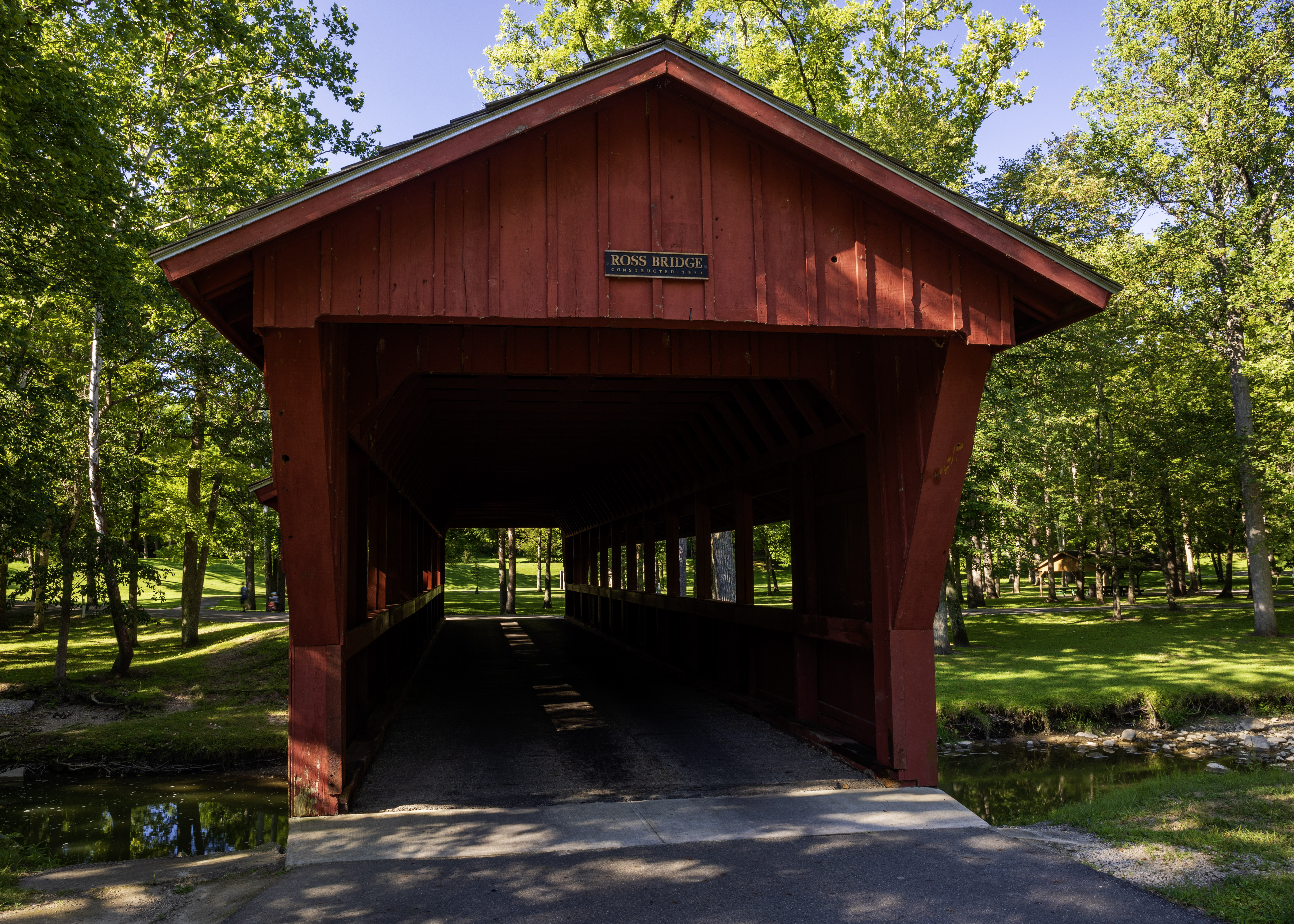
Ross Covered Bridge is the easiest landmark to build a Tawawa Park visit around. The City of Sidney calls it a picturesque feature that has long been a subject of photography. The city’s park history notes that the bridge closely resembles covered bridges associated with Ohio bridge builder Reuben L. Partridge.
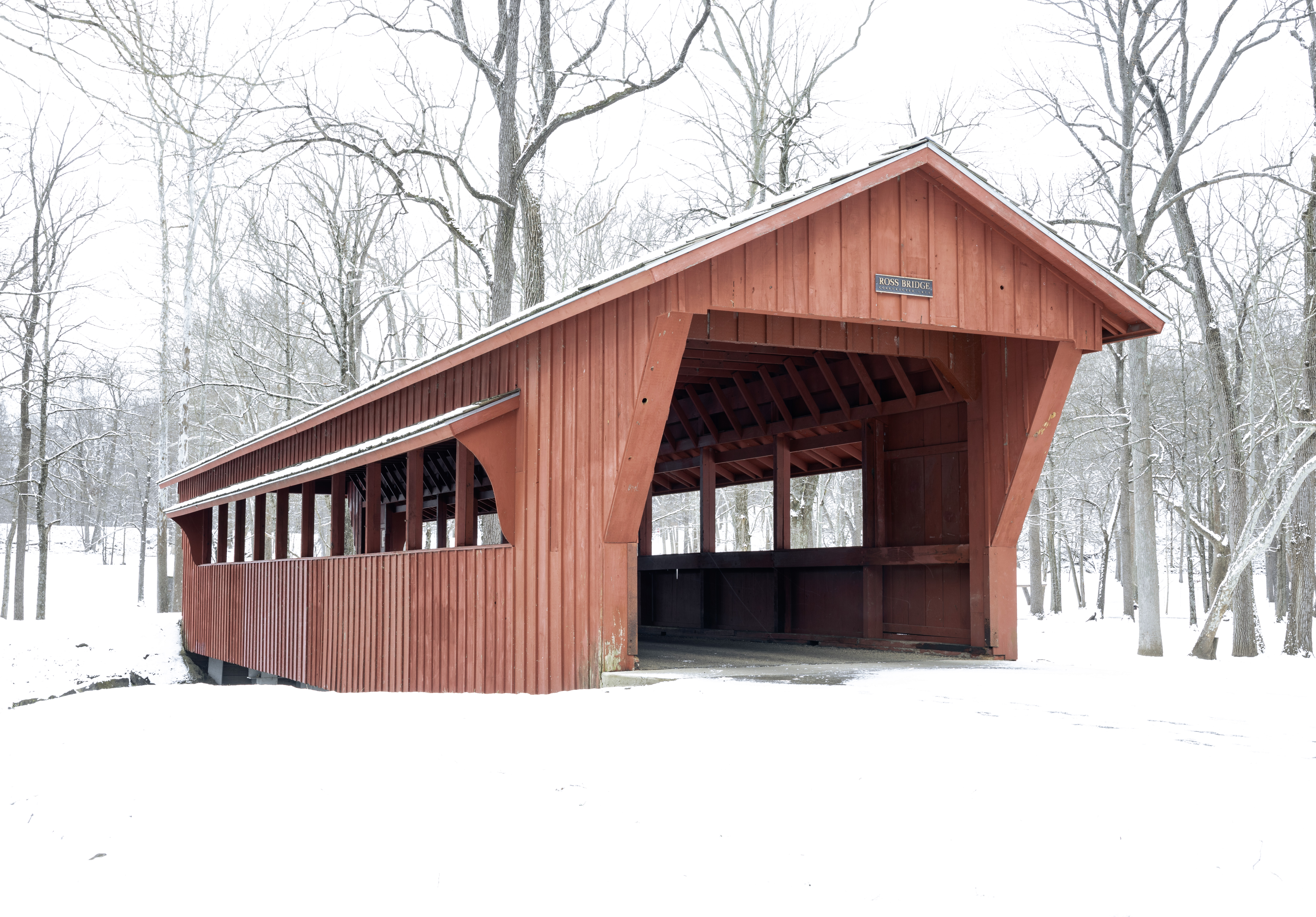
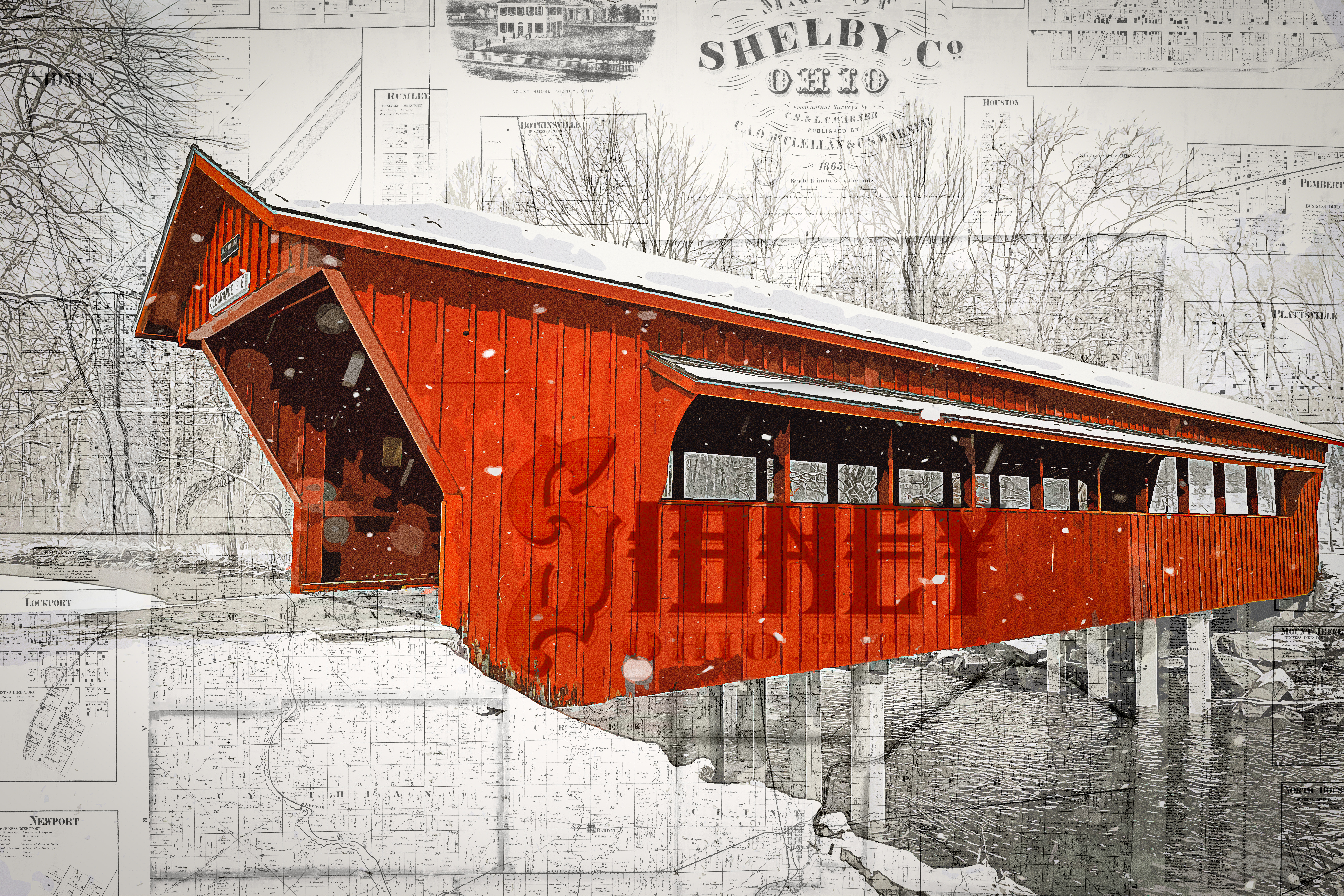
Photographically, the bridge works because the red structure holds attention in nearly every season. In summer, the red siding separates from the green woods. In fall, it can echo the warmer leaves. In winter, it becomes the strongest color or tonal anchor in an otherwise white and gray landscape.
Do not limit yourself to the straight-on view. Walk around the structure and look for side angles, tree framing, water beneath the bridge, backlighting, and more distant compositions where the bridge becomes one element in the landscape.
Try black and white when the light becomes the subject
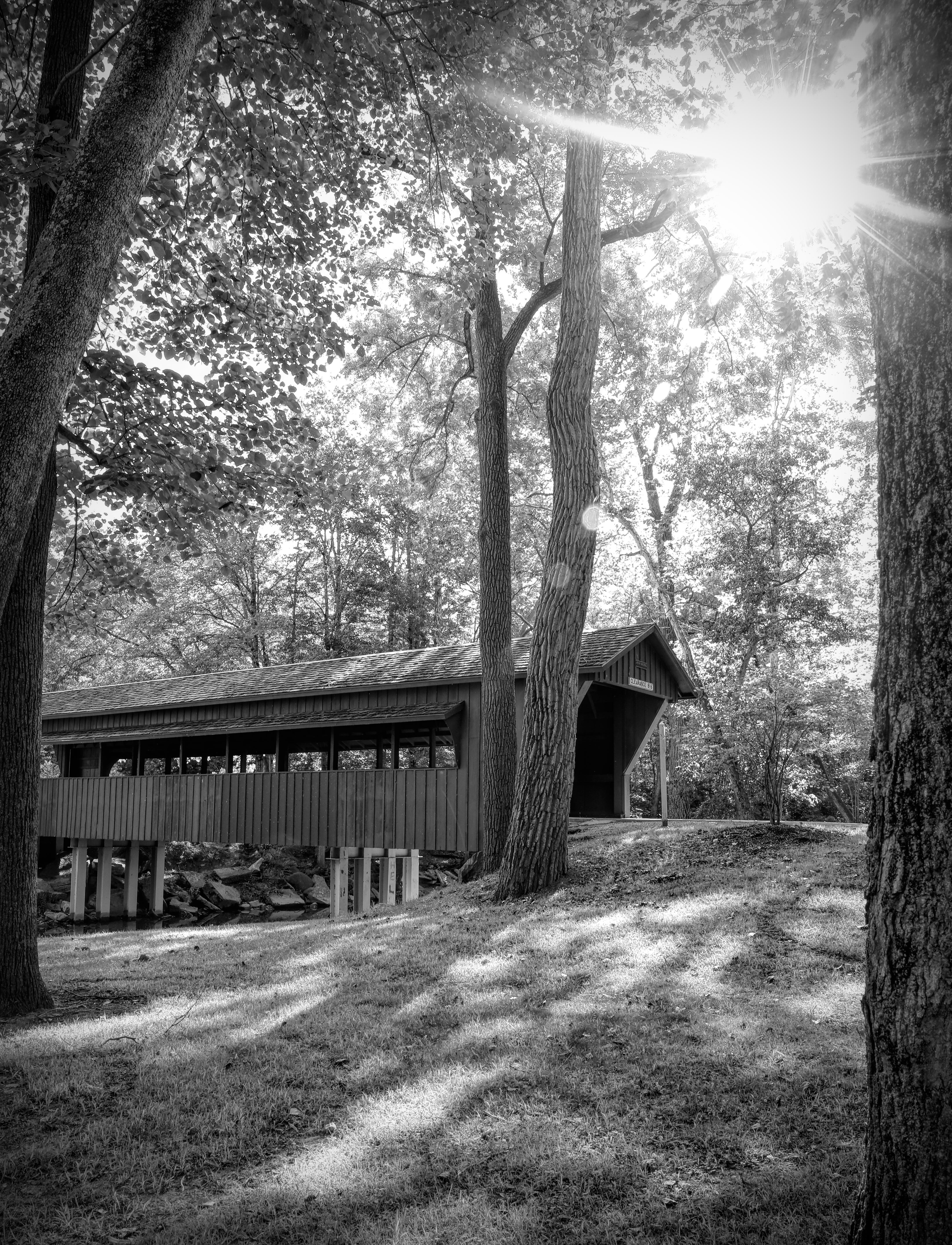
Ross Covered Bridge can also work without its signature red color. In black and white, the image becomes more about the geometry of the bridge, the vertical tree trunks, and the direction of the sunlight. Monochrome is especially useful when midday or backlight is creating strong highlights and shadows that would compete with color.
Use the creek and smaller bridges as compositional anchors
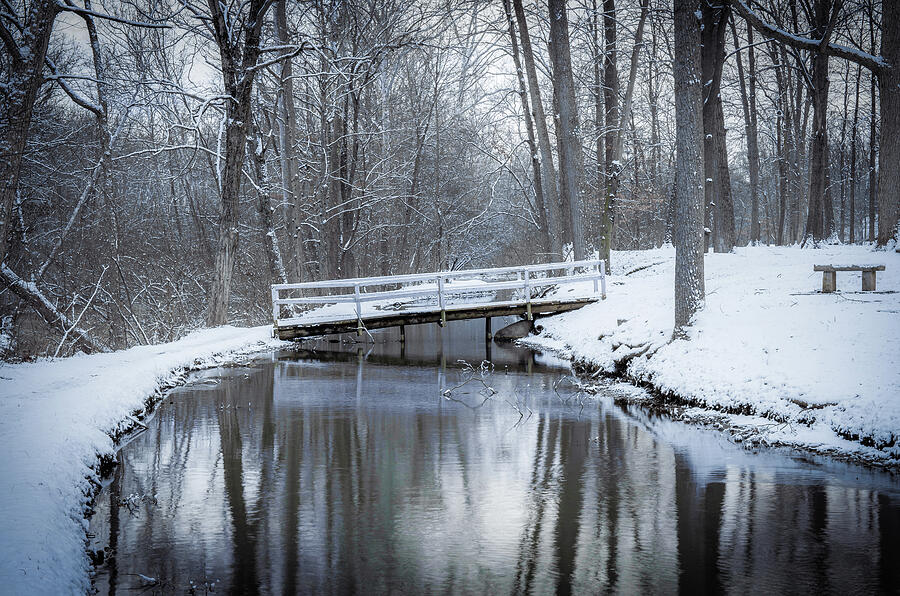
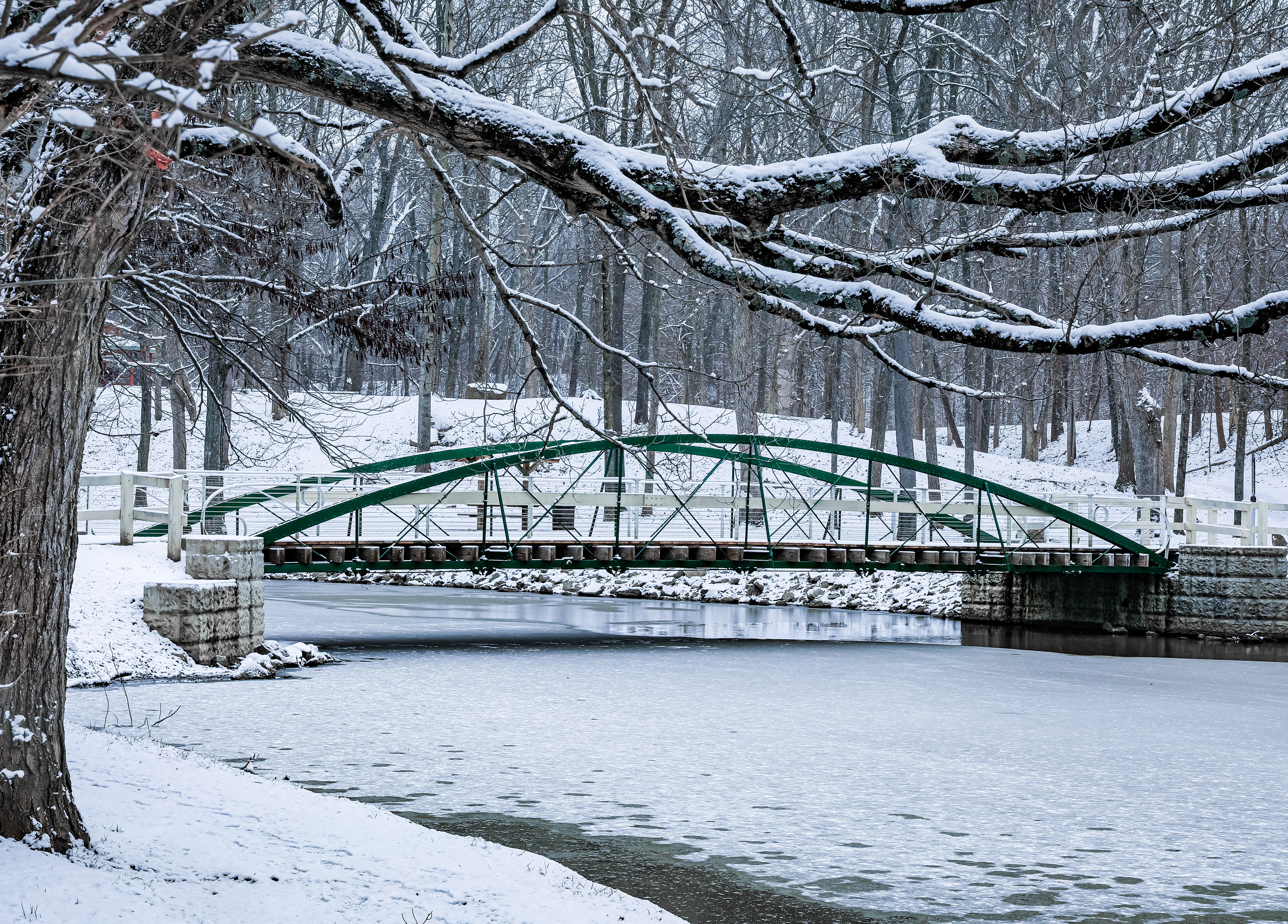
The covered bridge may be the most recognizable subject, but Tawawa Park becomes much more interesting when you pay attention to the water. Small bridges, creek bends, cascades, ice, and reflections give you leading lines and foregrounds that can hold together otherwise busy woodland scenes.
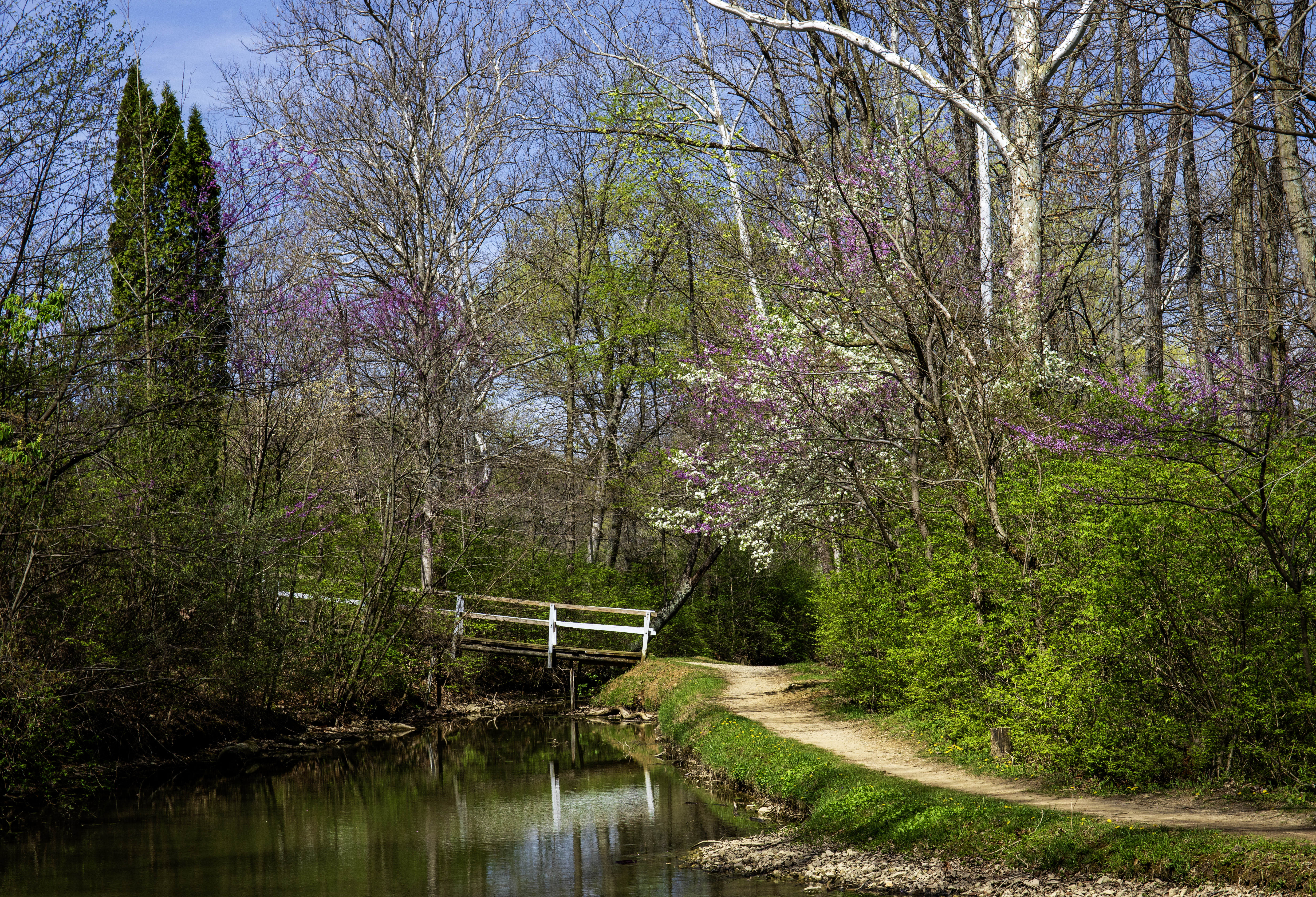
One of the most useful habits in a wooded park is to look for an object that organizes the frame. A small white bridge, a bend in the creek, a dark bank, or a patch of moving water can give the eye somewhere to go when the background is filled with trunks and branches.
Moving water is strongest after weather
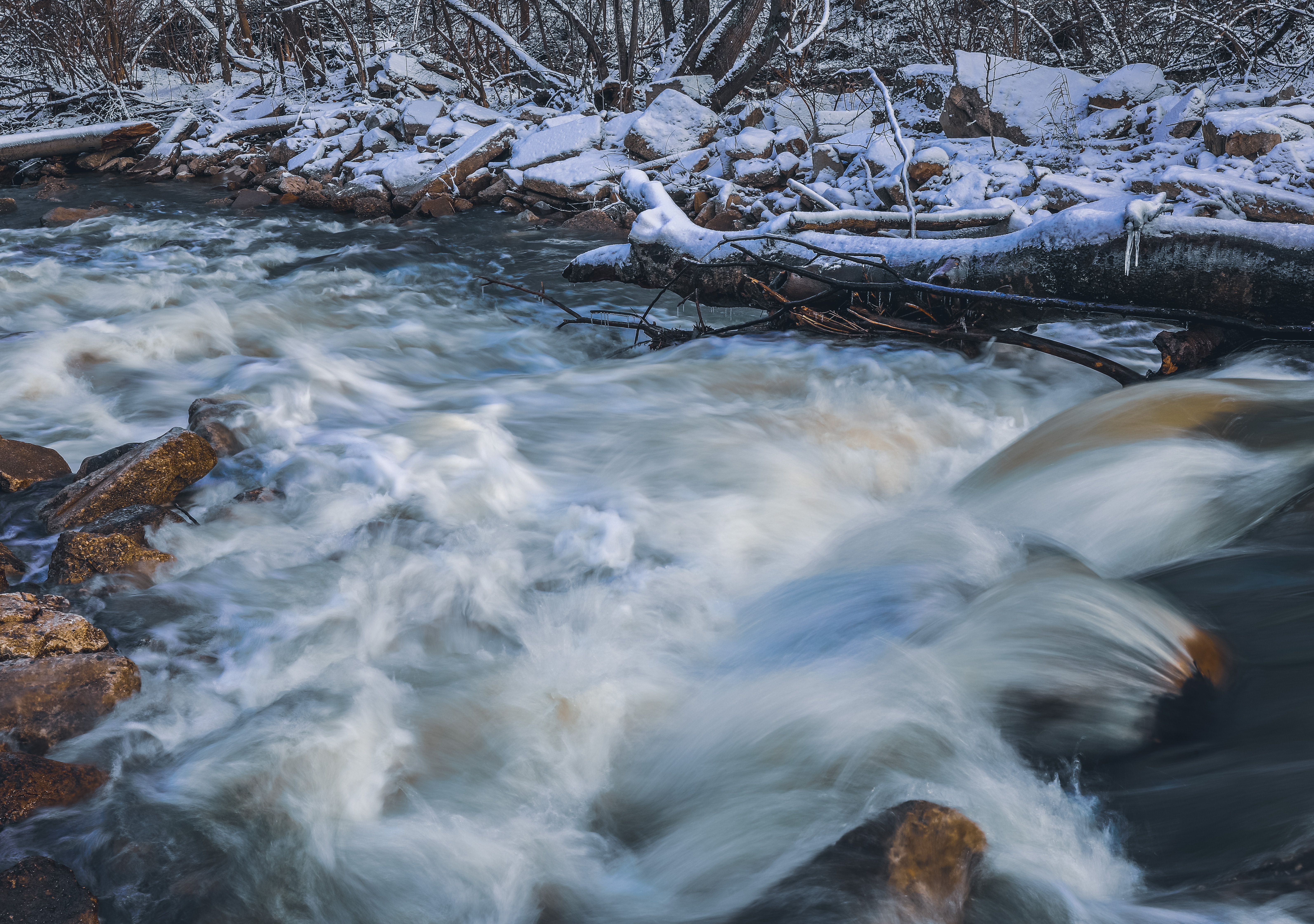
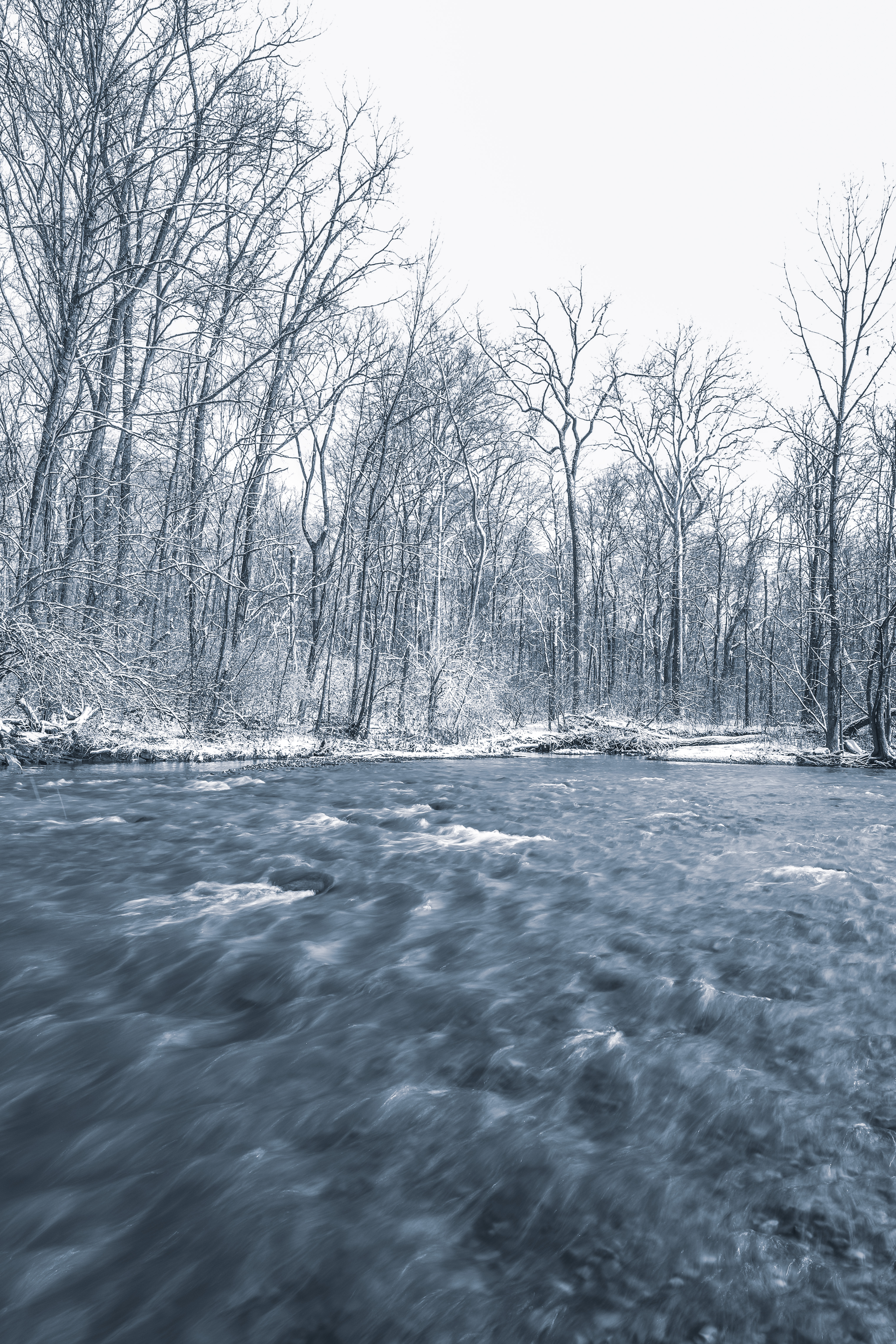
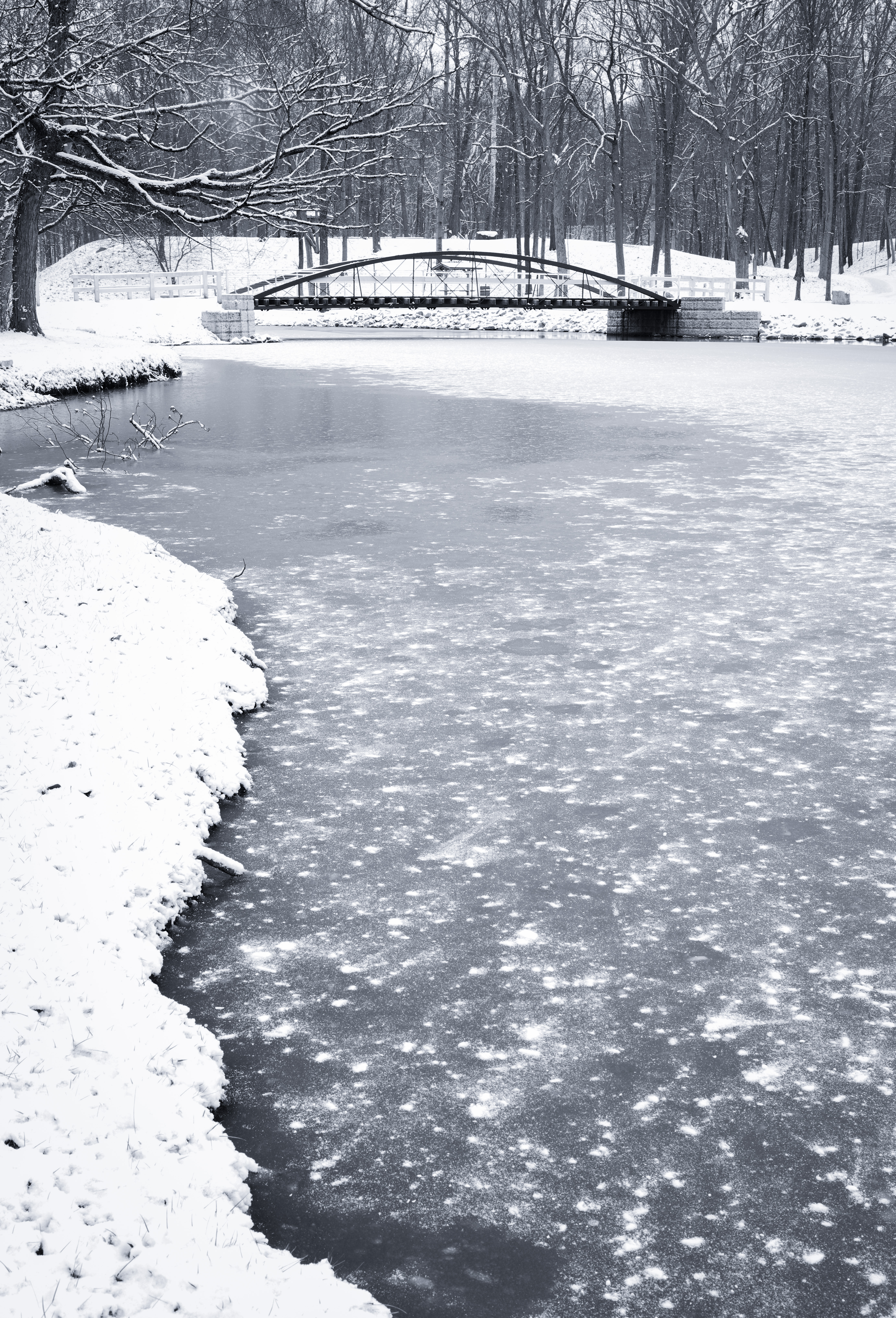
Creek photography improves when the park has received enough rain or snowmelt to create visible flow. In winter, that can mean photographing open water beside snow-covered banks. A slower shutter speed can soften the water while still preserving the texture of snow, rock, and wood.
Photograph Tawawa Park by season
There is no single best season. Each one changes what the park does well, and that is exactly why repeated visits are valuable.
Fresh growth and flowering trees
Look for pink and white blossoms, new green foliage, calmer water, and small bridges surrounded by emerging color. Overcast mornings help control contrast.
Green canopy and architectural contrast
Ross Covered Bridge is especially strong against dense green woods. Early and late light are easier to manage than harsh midday sun under a leafy canopy.
Color, reflections, and layered depth
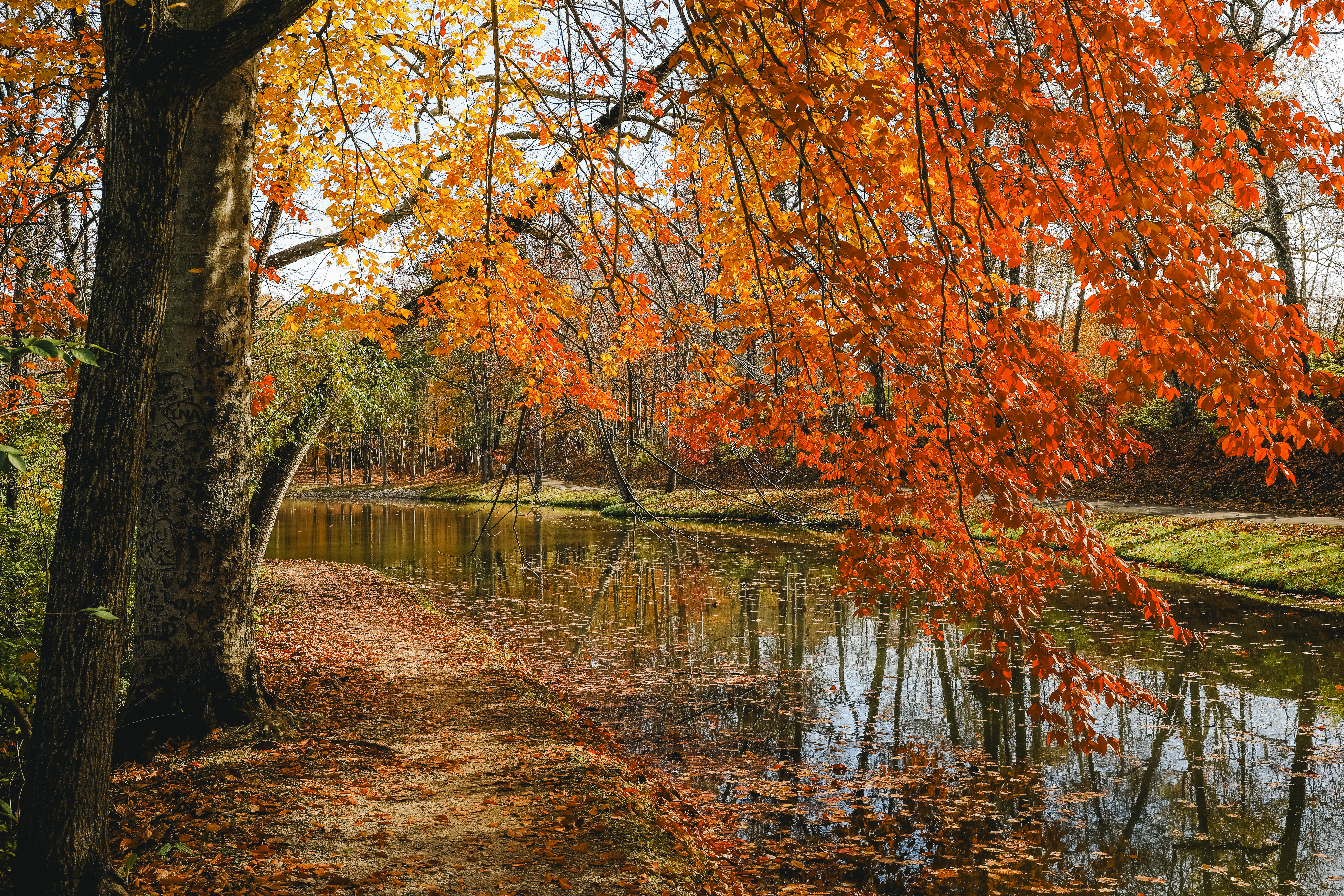
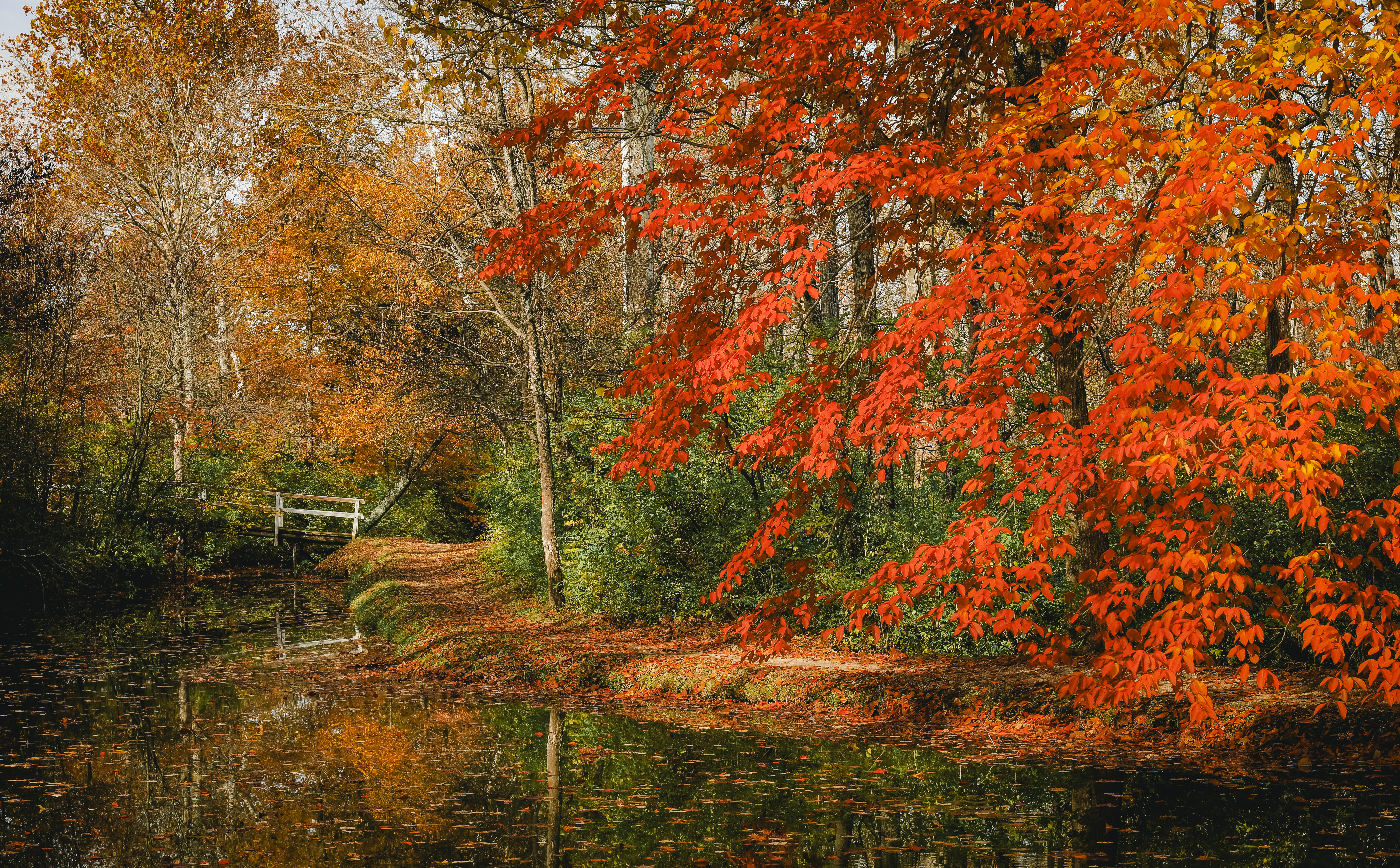
Use paths and water to organize bright foliage. Peak color varies by year, but October is the most useful planning window for repeat visits.
Snow, structure, and quiet geometry
Fresh snow simplifies the park, separates dark trunks from the ground, and gives bridges and moving water much stronger graphic presence.
A practical photography route through Tawawa Park
The official trail map gives you many combinations rather than one required loop. For photography, I would keep the route flexible so you can spend extra time when light, weather, or water conditions are working.
A flexible 2–4 hour photo walk
- Begin around Ross Covered Bridge. Photograph both direct architectural views and wider compositions using trees or water as framing.
- Follow the creek and nearby pedestrian routes. Look for smaller bridges, bends, cascades, reflections, and foreground detail.
- Work toward Amos Lake and the historic iron-bridge area. Reflections and bridge geometry can be stronger when the water is calm.
- Add a short natural-surface trail. Nature Trail, Benjamin Trail, or Ward Trail can shift the outing from landmarks to intimate woods.
- Finish around Tawawa Lake or another open-water section. This gives you a different visual rhythm after spending time in enclosed woodland.
The current City of Sidney map lists the Pedestrian/Tawawa Trail at 4.5 miles. Ward Trail and Lake Trail are each 1.5 miles; Benjamin Trail is 0.97 mile; Nature Trail is 0.53 mile; Trail to Eagle is 0.5 mile; Julia Lamb is 0.25 mile; Orbison Trail is 0.22 mile; and Akela’s Trail is 0.09 mile. You do not need to walk all of them to have a productive photo outing.
Hours, seasonal access, and practical planning
Tawawa Park is at 12 Tawawa Drive in Sidney. The City of Sidney’s current park map lists seasonal pedestrian hours beginning at 7 a.m., with closing times that vary from 5 p.m. in winter to 9 p.m. during the longest summer period. Because hours can change, check the official park page or map before a time-sensitive visit.
Winter access deserves special attention. Sidney states that the area east of the Whipp Road gate is closed to motor vehicles from November 1 through the third Friday in April. Pedestrians and cyclists are still welcome during normal park hours. For photographers, that means winter can be especially quiet, but it may also require a longer walk to reach some subjects.
Winter planning tip
Fresh snow is worth the extra walking. Bring traction appropriate for icy paths, keep spare batteries warm, and use a lens cloth for snow or condensation. Do not assume the road access you used in summer will be available in winter.
A little history makes the photographs more meaningful
Tawawa Park was established in 1948 under the Tawawa Civic Park Trustees and later deeded to the City of Sidney in 1956. The park takes its name from Tawawa Creek.
The City of Sidney describes Ross Covered Bridge as a major scenic feature and notes that it was dedicated in 1971. A separate city facility page says the bridge was named in 1974 for William Ross Jr., who served on the Sidney Recreation Commission from 1958 to 1972 and financed construction of the bridge.
Tawawa Park also contains important iron-bridge history. The restored Zenas King Bridge was moved to the park in 2020 and dates to 1879. In April 2026, Sidney reported final work to set the restored D.H. Morrison Bridge in Tawawa Park; that bridge was manufactured by Dayton’s Columbia Bridge Works and originally erected in 1874.
What light and weather work best?
Wooded parks are often easier to photograph under softer light than under a clear midday sun. Overcast skies reduce contrast and keep detail in tree bark, bridge siding, snow, and water. After rain, creek flow may improve and foliage often becomes more saturated. Fresh snow simplifies the background and can be worth photographing even under gray skies.
Early morning is useful for quieter trails, calmer water, and low-angle light. Late afternoon can bring warmer light to Ross Covered Bridge and the open edges of the park. If you are specifically chasing fall color, avoid assuming one date will be perfect every year; temperature, wind, and rainfall can shift peak conditions substantially.
Camera gear and settings that fit the park
You do not need specialized equipment. A versatile midrange zoom is enough for most scenes because you will move between wide woodland compositions, tighter bridge studies, water details, and vertical landscapes.
- 24–105mm or similar: enough range for most bridge, creek, woodland, and trail compositions.
- Tripod: useful for moving water, winter low light, and careful bridge compositions.
- Circular polarizer: helpful for controlling glare on leaves and water, though it can unevenly darken blue skies on very wide lenses.
- Lens cloth: especially important after rain or during snow.
- Moderate slow shutter speeds: often better than extremely long exposures when you want water to retain texture and energy.
Official resources before you go
For current access, maps, rules, hours, and park updates, use the City of Sidney as the final source before your visit. This is especially important during winter gate closures, construction, special events, or seasonal changes.
Official facility page with address, park overview, documents, and current city information.
Official MapTrail & Park MapTrail names, distances, bridges, lakes, park features, and seasonal pedestrian hours.
Local HistoryHistory of Tawawa ParkBackground on the park’s creation, land use, trustees, and early development.