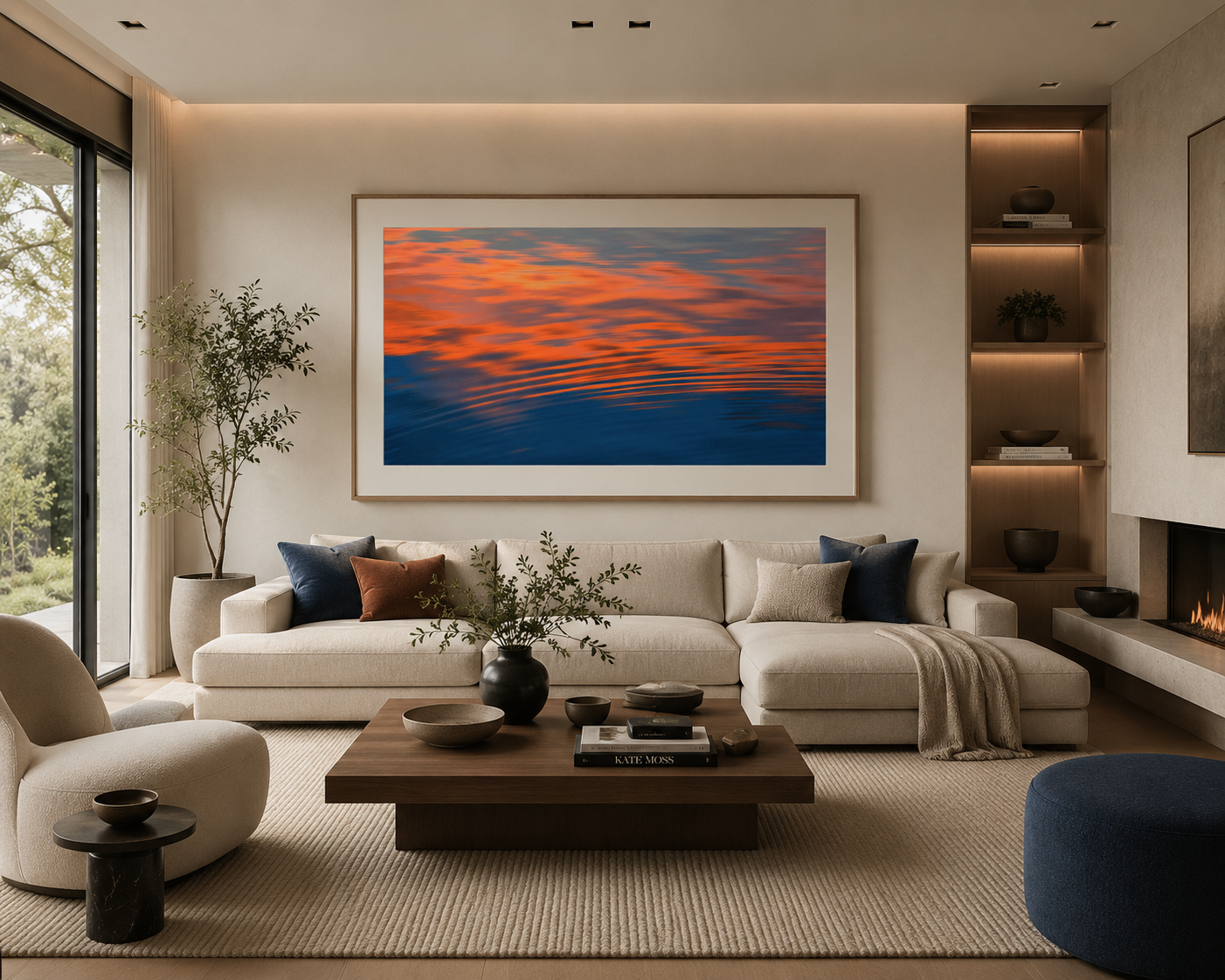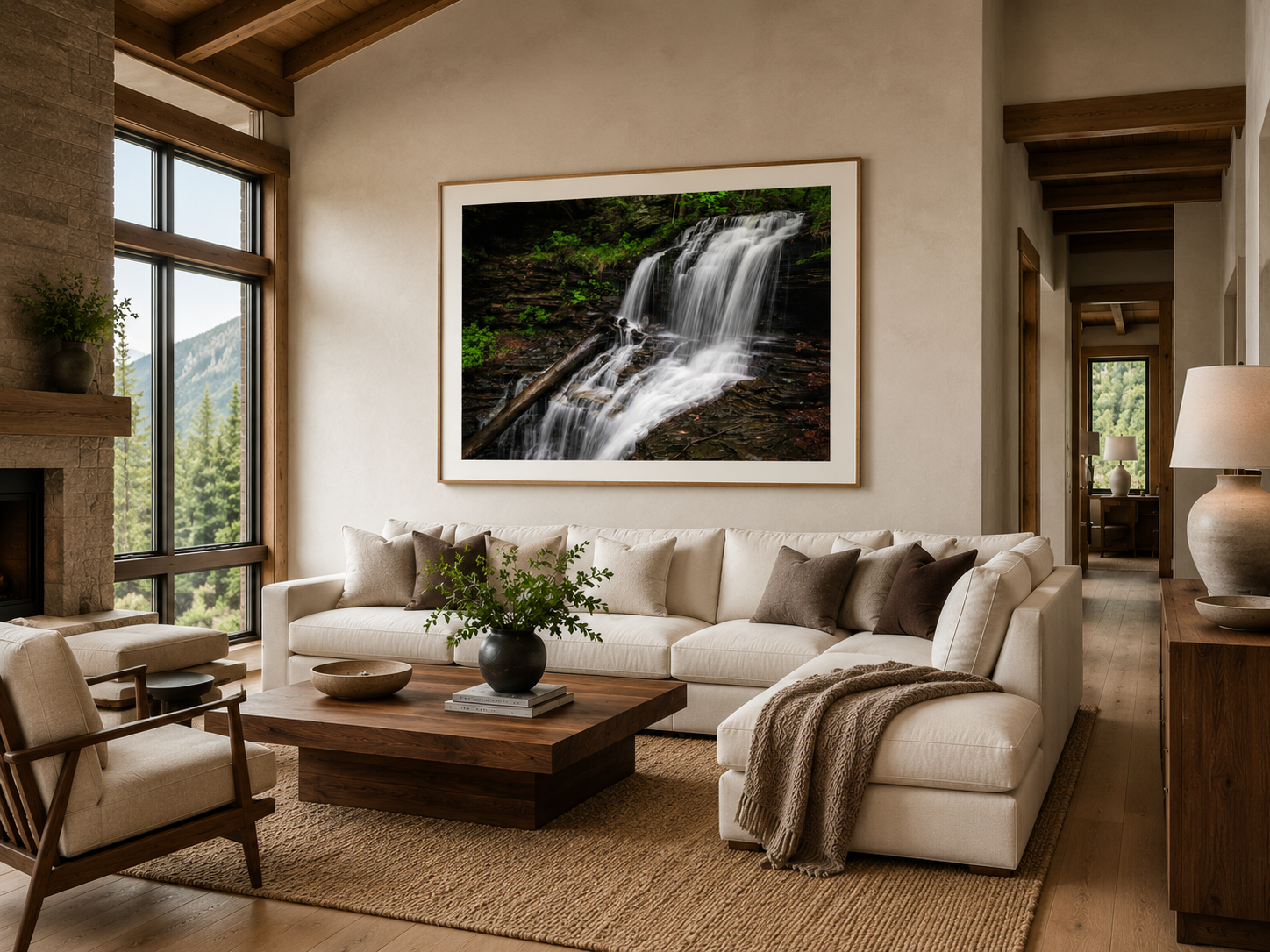
Water has a natural connection to calm.
There is a reason people return to water when they need a room to feel slower. Lakes, waterfalls, shorelines, rivers, and moving reflections all carry a rhythm that feels familiar before it feels decorative.
In artwork, water can hold attention without becoming loud. It gives the eye movement, texture, and depth, but it usually does not demand the same visual effort as a busy scene or high-contrast subject.
Why it works so well in living rooms.
Living rooms need artwork that can hold a wall from across the space. At the same time, they are rooms built for conversation, rest, and daily use. Water imagery is useful because it can create a strong focal point while still feeling easy to live with.
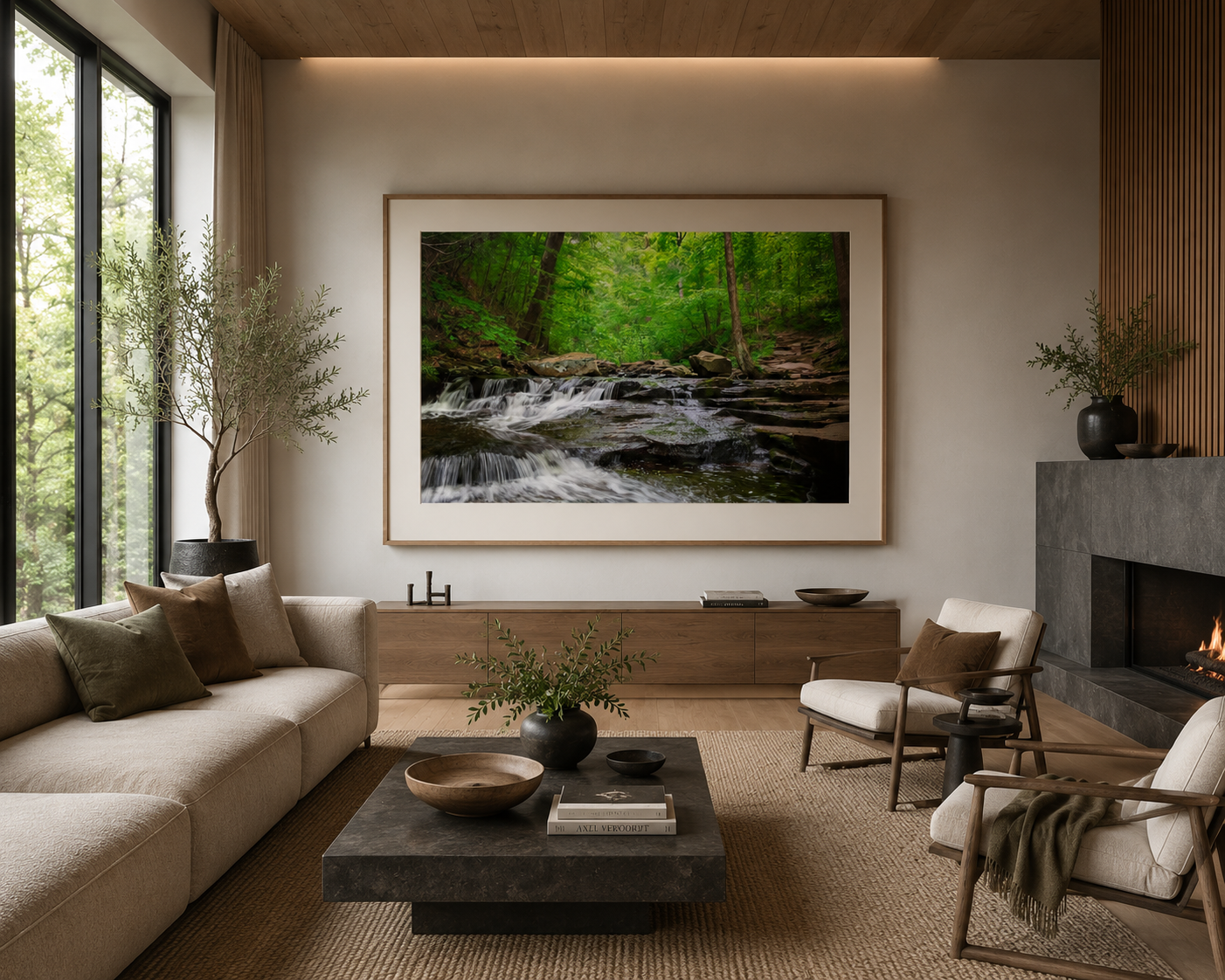
A large waterfall or lake image can anchor the seating area, especially above a sofa, fireplace, or console. The movement in the image keeps the wall from feeling flat, while the natural subject keeps the room from feeling overworked.
Bedrooms need a quieter kind of movement.
In bedrooms, the role of artwork changes. The goal is less about making a statement and more about supporting the atmosphere of rest. This is where soft, abstract, or blurred water imagery can work beautifully.
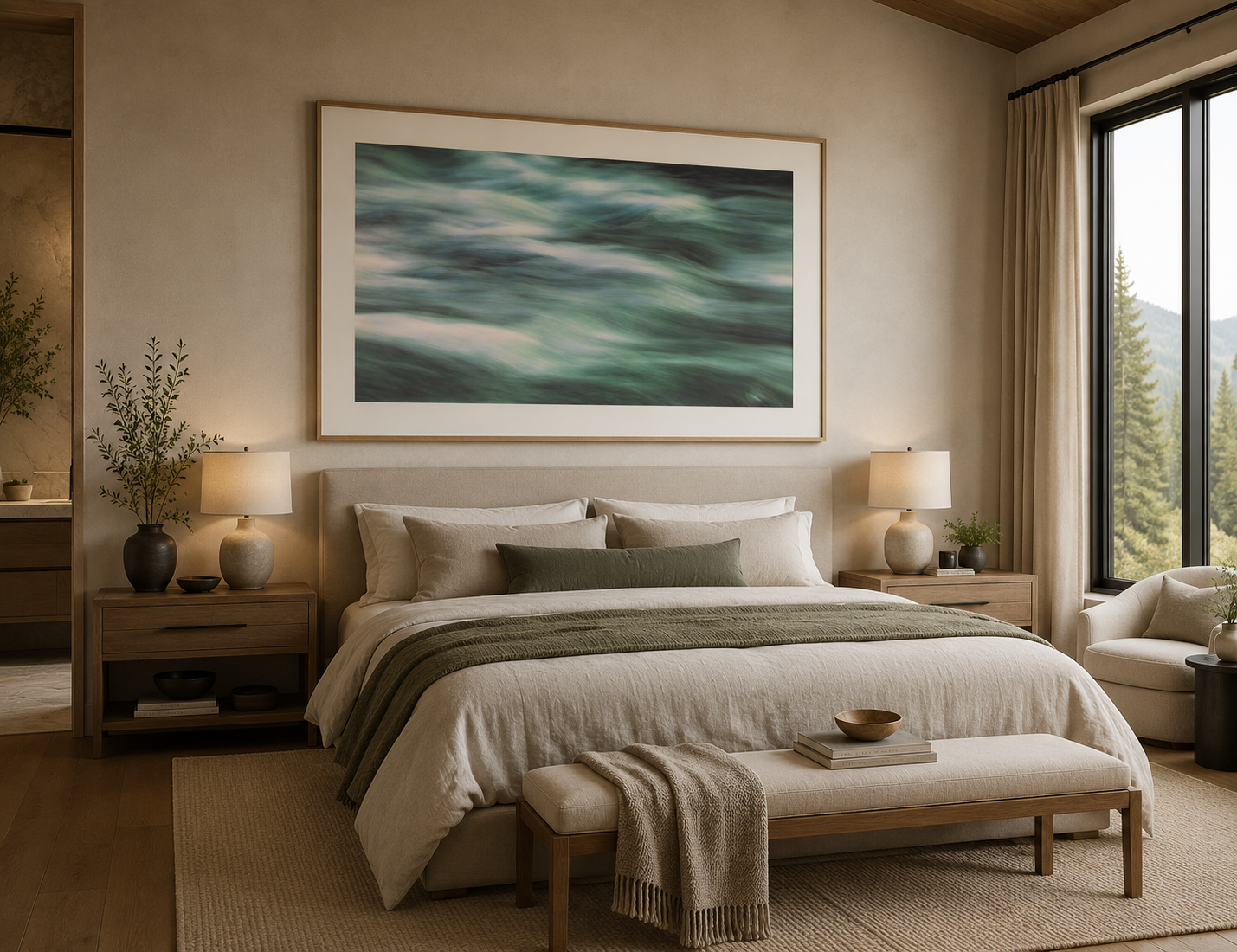
A misted shoreline, a slow exposure waterfall, or a softly panned wave pattern can bring atmosphere to the room without introducing too much detail. That restraint matters. The bedroom should not feel like a gallery wall competing for attention.
Warm water and cool water create different rooms.
The temperature of the image matters as much as the subject. Cool water imagery often feels minimal, clean, and spa-like. Warmer water imagery, especially sunset reflections, can feel richer and more residential.
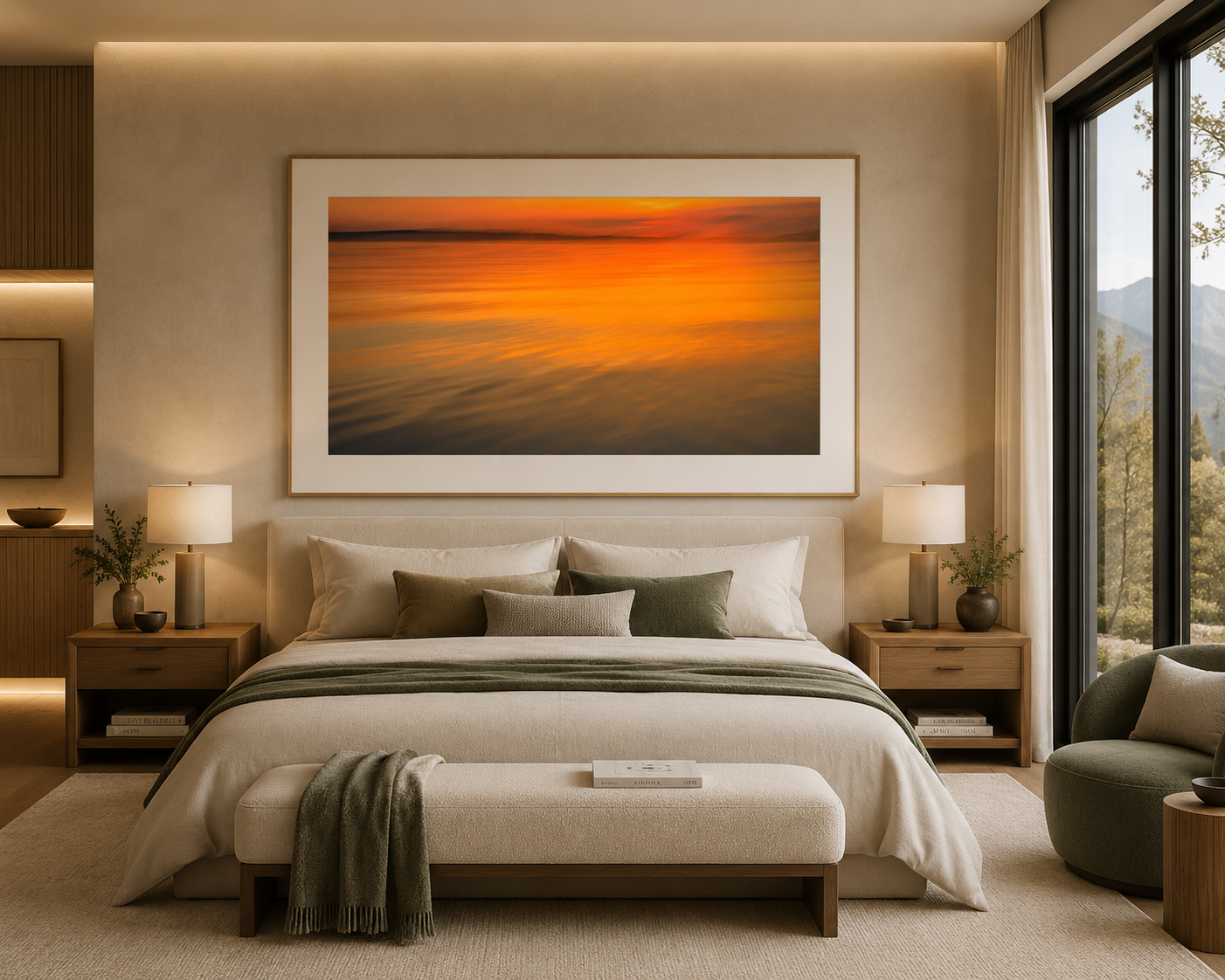
This is one of the reasons water imagery adapts so well across different spaces. The same subject can feel crisp, quiet, romantic, moody, restorative, or dramatic depending on the light, palette, and print presentation.
Why designers return to water again and again.
Water imagery is versatile. It works in homes, offices, clinics, waiting rooms, guest rooms, spa environments, senior living interiors, and hospitality spaces because the subject is familiar without feeling generic.
In healthcare and wellness spaces, water can help soften the emotional tone of a room. In hospitality, it can create a sense of place and retreat. In residential interiors, it brings natural movement into a room that might otherwise feel still or overly arranged.
Where water imagery works especially well
- Above a sofa, where the image can anchor the seating area.
- In bedrooms, where softer water movement supports rest.
- In waiting rooms and wellness spaces, where calm matters immediately.
- In hospitality interiors, where water can suggest retreat, place, and atmosphere.
- In neutral rooms that need life, depth, and natural texture.
Atmosphere matters more than decoration.
The most successful interiors are not built only around objects. They are built around feeling. Water imagery contributes to that feeling through subtle movement, softness, reflection, and rhythm.
Collections like Wellness Waters are useful when the goal is a quieter, more grounded atmosphere. The right piece should not simply match the room. It should help the room exhale.